Deep Learning Enters the Car
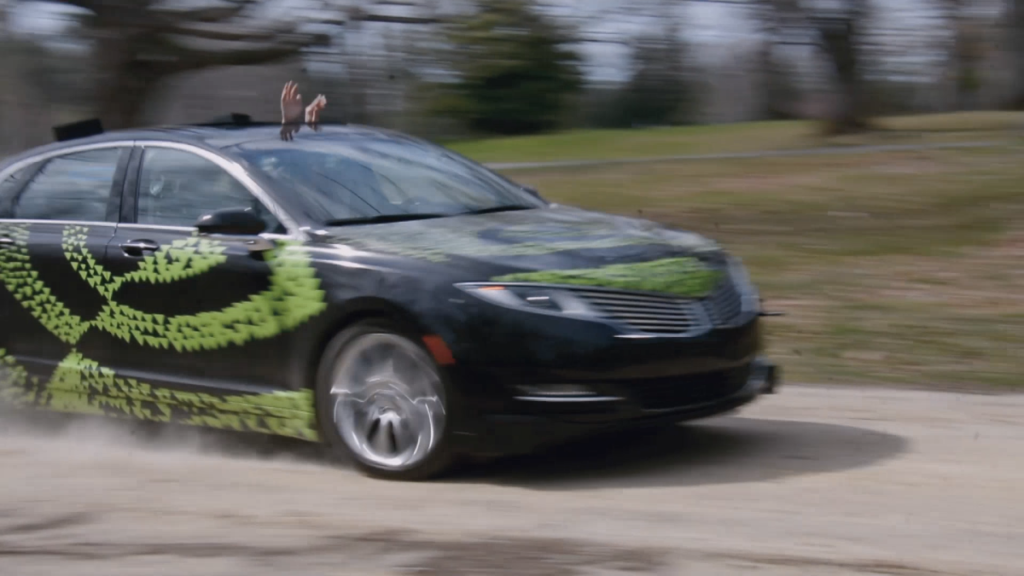 NVIDIA's Lincoln MKZ research vehicle used in the DAVE-2 experiment, which demonstrated end-to-end learning from camera images to steering commands in 2016. Source: NVIDIA.
Early military and research trials only opened the door; the commercial wave that followed blew it wide open. This first autonomous-driving boom created billion-dollar companies, attracted the world's biggest investors, and promised a completely new era of mobility. Fueled by the soaring optimism of the mid-2010s and massive influxes of venture capital, startups and tech giants alike raced to commercialize self-driving software. The technology was getting better, powered by deep neural networks that could interpret camera data and recognize traffic elements through learned statistical patterns rather than relying entirely on hand-engineered rules. The business was getting harder, as the industry learned that proving a concept in a simulation or a geofenced test track is a universe away from building a sustainable, revenue-generating enterprise in the physical world. As these neural networks matured and found support from powerful GPUs and massive datasets, the consequences for autonomous vehicles were profound: cameras could provide raw images while the machine learned to recognize pedestrians, vehicles, traffic signs, road markings, and other features through statistical patterns rather than explicit engineering descriptions. One of the most notable demonstrations came from NVIDIA's 2016 DAVE-2 research system, which showed a convolutional neural network learning a relationship between camera images and steering commands. While a relatively simple experiment compared with today's systems, it represented an important conceptual shift by demonstrating that a neural network could learn steering behavior directly from driving data. This did not eliminate traditional robotics, as vehicles continued using hybrid architectures combining neural networks with conventional software, maps, localization, planning, and control for years. But the balance was changing, and the car was no longer simply executing rules written by engineers; it was increasingly learning how to interpret the world.
A New Industry Emerges
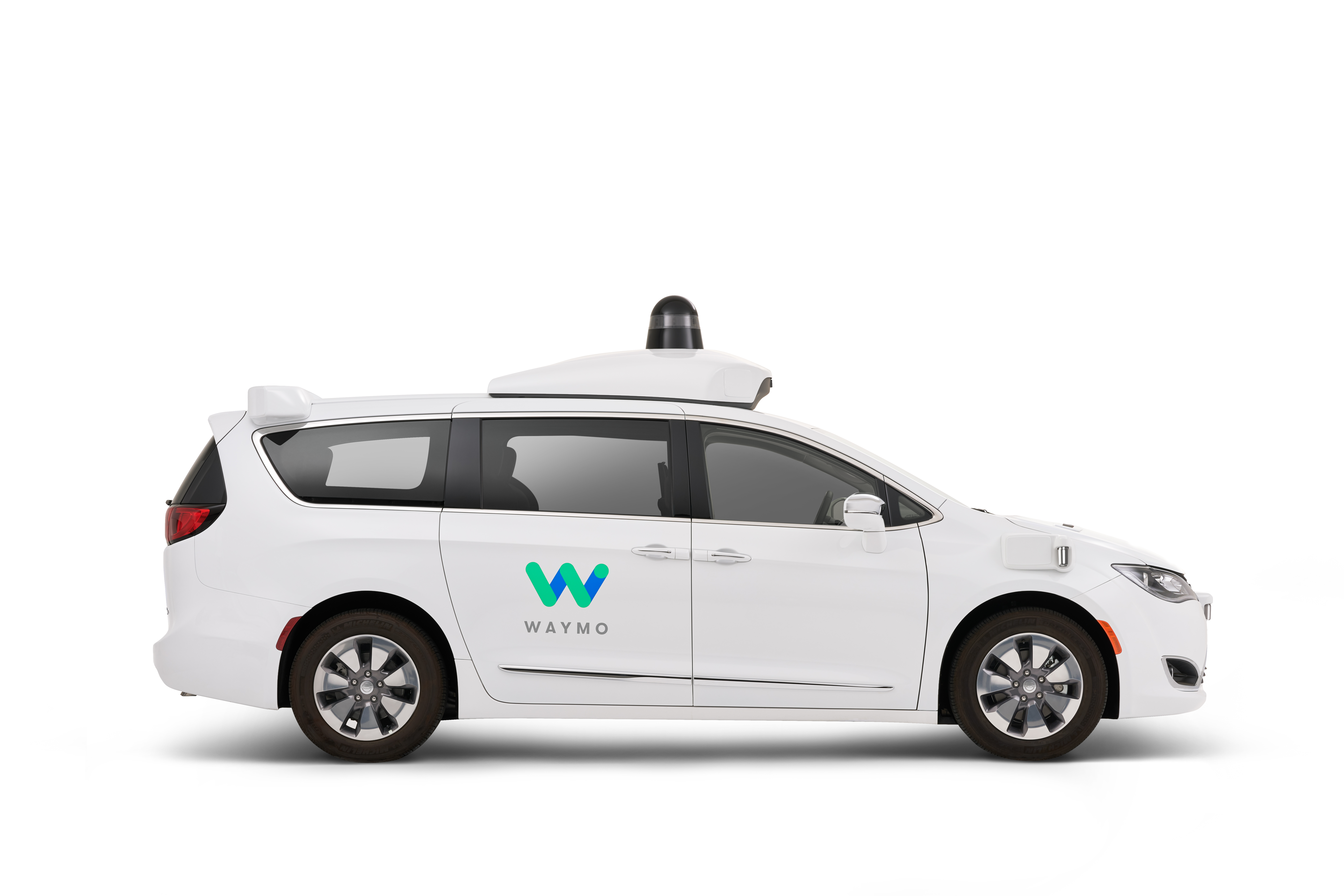 Chrysler Pacifica equipped with Waymo’s autonomous driving technology. Credit: Waymo.
This technological shift coincided with the arrival of a new generation of autonomous-driving companies. Google had begun its self-driving project in 2009, which became Waymo, an independent Alphabet company, in 2016. Then came the startups: nuTonomy and Cruise were founded in 2013, Zoox in 2014, Pony.ai and Argo AI in 2016, and Aurora in 2017. The significance of these companies was not simply that they built autonomous cars, but that they changed the structure of the industry by turning autonomous driving into a venture-backed technology race. Billions of dollars flowed into companies whose primary product was a software-and-hardware system capable of driving a car, changing development processes. Instead of automotive product cycles measured in years, companies increasingly experimented with software releases, fleet testing, simulation, and continuous data collection. Every vehicle on the road became a source of information, every disengagement could become a valuable training or evaluation example, and every unusual situation could potentially improve the next version of the system. The autonomous vehicle began to look less like a conventional car and more like a continuously evolving computer platform.
The Optimism of 2017
By 2017, the optimism was difficult to miss. McKinsey wrote that highly autonomous vehicles might be only five to ten years away, while another analysis suggested that fully autonomous Level 5 driving remained more than a decade away but that geofenced autonomous applications could arrive much sooner. PwC's 2017 Digital Auto Report anticipated the first series-ready Level 4 "robot cars" around 2023 and Level 5 around 2028, projecting approximately 80 million autonomous vehicles in circulation across Europe, the United States, and China by 2030, with autonomous driving accounting for a substantial share of mileage in Europe.
These forecasts were not absurd; they were based on real technological progress including rapidly improving computer vision, falling computing costs, more capable sensors, abundant venture capital, major technology companies involved, automotive partnerships, and impressive early road tests. And yet, something fundamental had been underestimated: driving is not simply an exercise in recognizing objects, but an open-ended interaction with the physical world.
The Problem with "Self-Driving"
One of the biggest sources of confusion in the autonomous-driving debate has always been the phrase "self-driving," because there is an enormous difference between a vehicle that can drive itself on a particular road under particular conditions and a vehicle that can drive anywhere, at any time, under any conditions. That distinction is captured by the SAE automation levels. Level 2 systems can assist the driver but require continuous human supervision. Level 3 systems can perform the driving task under defined conditions but expect the human to take over when requested. Level 4 systems can operate without human intervention inside a defined operational domain. Level 5 is the extreme case: automation capable of driving under all conditions in which a human could drive, without human intervention. This distinction explains much of the apparent contradiction in the industry. A company can have a vehicle that drives itself successfully for millions of miles and still be nowhere close to Level 5. A robotaxi operating within a defined operational domain in a city is a very different engineering problem from a private car expected to drive from a rural road in Canada to an unfamiliar mountain destination during a snowstorm. While the first problem is difficult, the second approaches an entirely different category of difficulty.