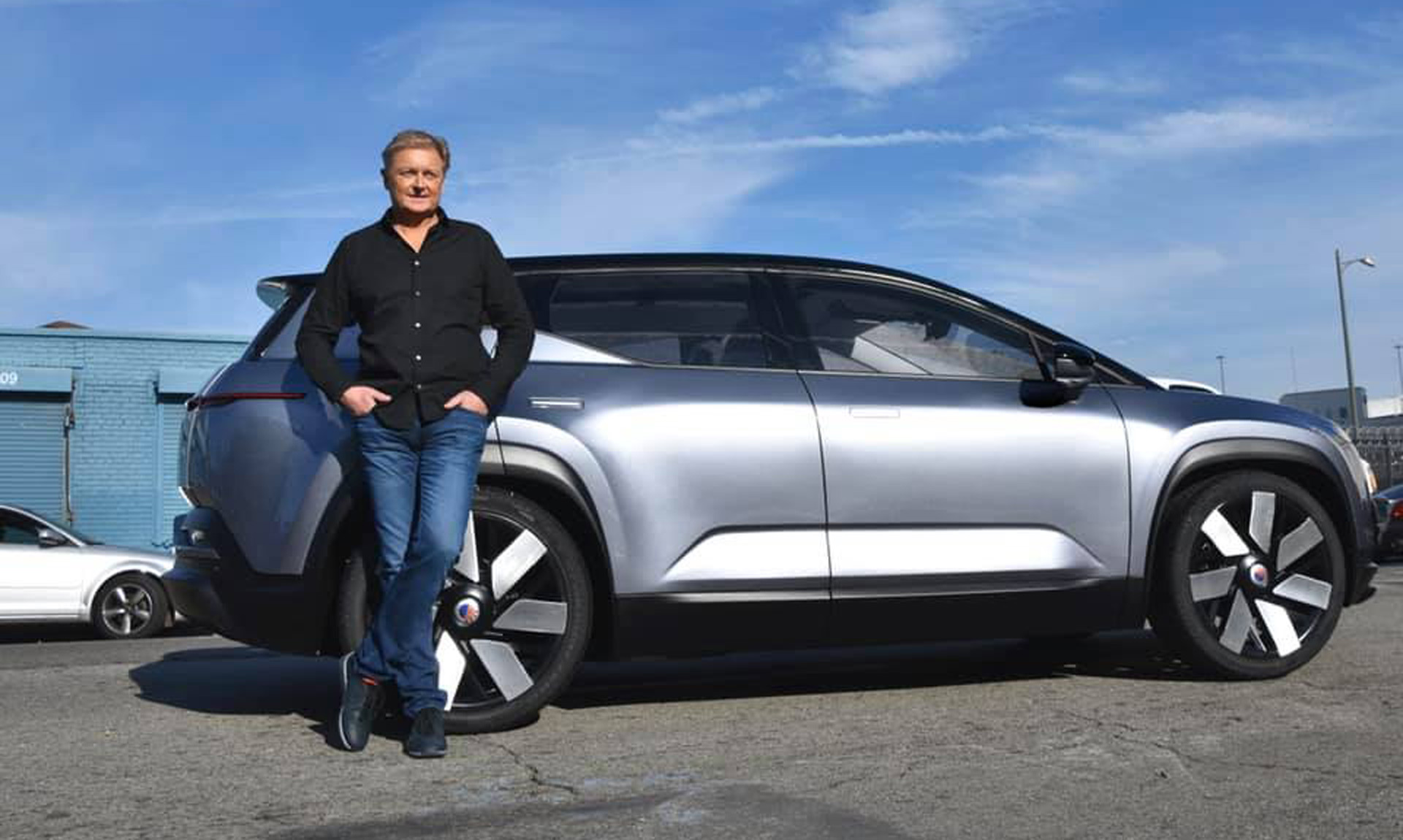
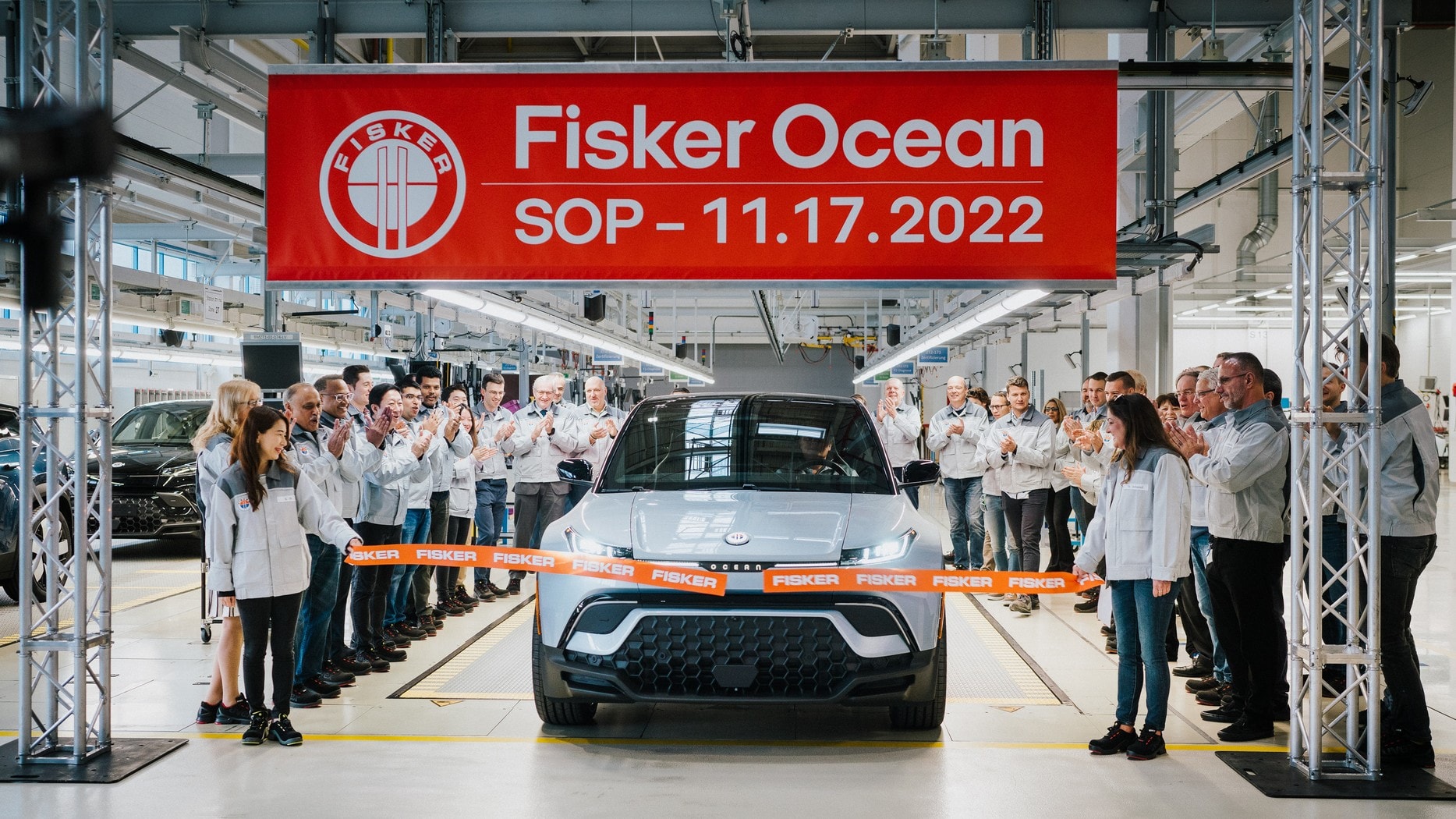
 Fisker's Ocean took shape not in a factory of its own, but on Magna's assembly line — the arrangement meant to keep Fisker asset-light. Source: Fisker Inc
By 2022, the flood of money into EV startups had begun to slow. The capital that had poured into the sector during the boom did not suddenly disappear. What changed were the conditions that had made that capital abundant. As interest rates rose and valuations fell, SPAC investors and broader financial markets became less willing to finance ambitious projections without evidence of progress. Money was still available, but it was no longer as patient, inexpensive or easily attracted as it had been before.
For the startups that had raised money at extraordinary valuations, the timing was particularly unforgiving. Building an automobile company consumes cash at almost every stage. Engineering programs require years of investment before generating revenue. Factories require tooling and equipment before they produce their first vehicle. Suppliers often need deposits and minimum volumes. Vehicles must be certified, tested and shipped. Warranty reserves and service operations have to be established. And even after all that, production itself can generate losses.
A company can therefore report rising deliveries while simultaneously moving deeper into financial trouble. That is exactly what made the post-SPAC period so difficult. The companies had raised enormous sums, but their business models depended on reaching production volumes that were still years away. When the valuations fell, raising additional money became harder and more expensive. The result was a vicious cycle: lower valuations increased the cost of capital, while higher capital requirements accelerated the need for financing.
The problem was not simply that investors had become less enthusiastic about EVs. The problem was that the economics of building an automaker were beginning to assert themselves. Fisker had structured itself to stay asset-light, handing manufacturing to outside partners so it could concentrate on design and technology. Its collapse is a clear illustration of what happened when that bet met reality. The story was not simply that an electric vehicle had failed to find customers. It demonstrated something more fundamental: even an asset-light automaker like Fisker still had to coordinate an enormous industrial system, and still needed enough demand and capital to keep that system operating.
The failures among the startups were not identical, and that distinction matters. Some companies struggled primarily with production. Others suffered from weak demand, high costs, financing difficulties, strategic decisions or a combination of several factors. Some had technology that worked but could not be produced economically at the necessary scale. Others had ambitious manufacturing strategies that proved difficult to execute.
The SPAC structure itself did not manufacture the vehicles, manage the factories or create the demand. It did, however, contribute to the environment in which many of these companies were valued on the basis of ambitious future projections. That distinction is important because it is tempting to look backward and conclude that the SPAC boom (2020–2021) itself was the problem. The evidence is more complicated.
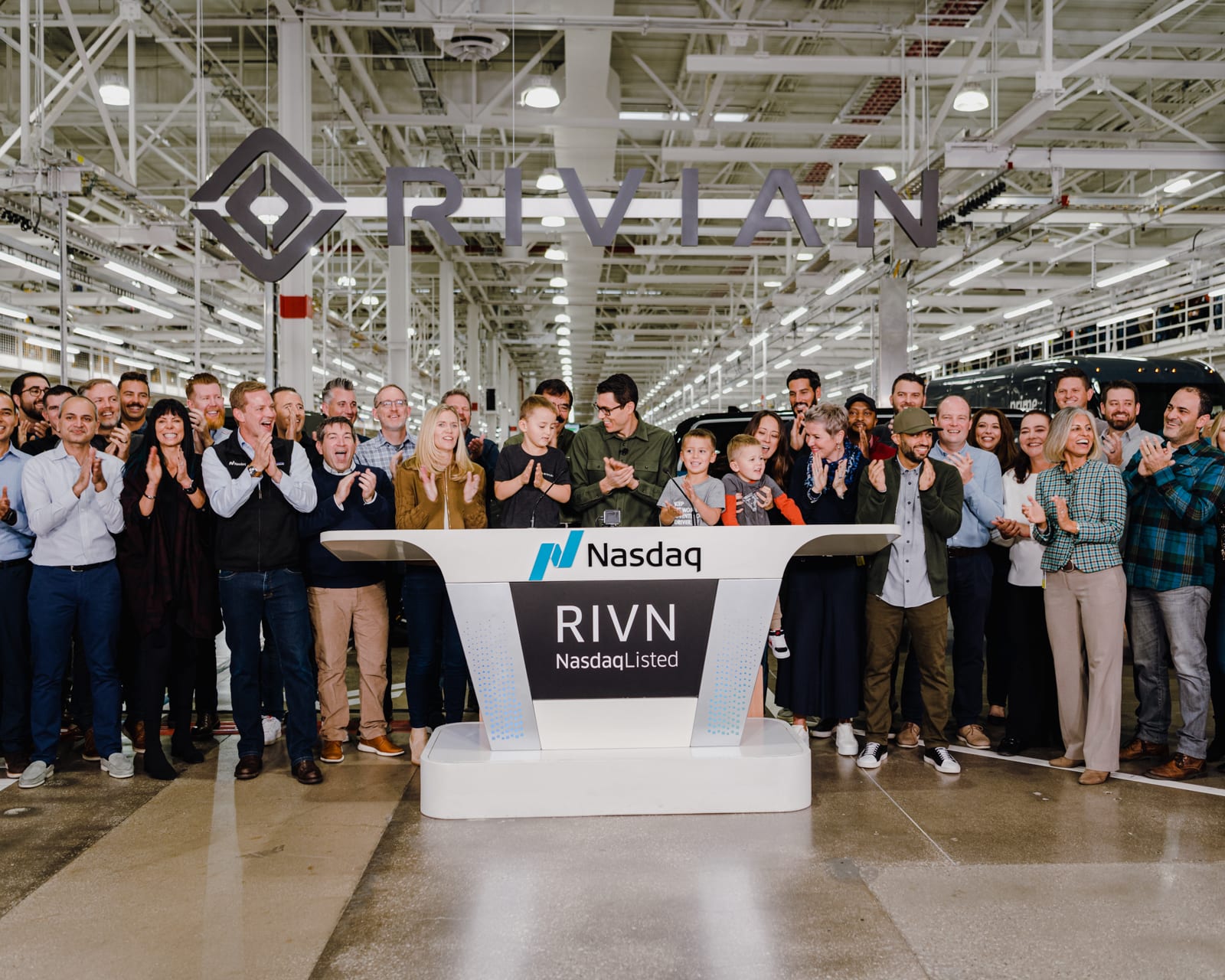 RJ Scaringe, Rivian's CEO, during the company's 2021 IPO — the conventional route to public markets, in contrast to its SPAC-merged EV peers. Source: Rivian
A conventional IPO would not have made the fundamental challenges of automotive manufacturing disappear. A company still would have needed factories, suppliers, batteries, customers and billions of dollars of capital. Rivian is a useful reminder. Unlike the companies that entered the public markets through SPAC mergers, Rivian completed a conventional IPO in 2021. Its shares initially traded at a valuation that reflected enormous expectations for the company's future. Yet Rivian also encountered the same underlying industrial realities: production bottlenecks, supply-chain constraints, high costs and the enormous amount of capital required to scale an automotive operation.
The difference was not simply the route to the stock market. The difference was whether the company could survive long enough—and raise enough capital—to reach sustainable scale. That became increasingly difficult as valuations collapsed. The stock-market decline was brutal across much of the sector. Companies that had once been valued in the billions were suddenly worth a fraction of those amounts. For businesses that still needed to raise money, this created a particularly dangerous problem.
A company that had raised $500 million at a high valuation might have believed it had enough capital to reach the next major milestone. But if the stock price subsequently collapsed, raising another $500 million could require issuing dramatically more shares. Dilution increased, investor confidence weakened, the cost of capital rose, and the runway shortened.
The language of the boom had changed. The question was no longer, How big could this company become? It was, Can this company survive long enough to find out? For some, the answer was no.
But the failures also reveal something deeper. Each company's specific breaking point was different, yet a common set of underlying pressures—capital intensity, industrial complexity, and the need to reach scale—ran beneath all of them. If those pressures appeared across companies pursuing very different strategies—outsourcing, microfactories, proprietary plants, commercial fleets, premium cars, buses and trucks—perhaps the problem was larger than the companies themselves. Perhaps the real challenge was the industry they were trying to enter.
Automotive manufacturing has always been unusually difficult. It requires enormous capital, complex supply chains, stringent quality control and a production system in which thousands of components must work together repeatedly, at scale and at a cost customers will accept. Electric vehicles did not eliminate those requirements. In some respects, they created new ones.
Batteries became one of the most strategically important components of the vehicle. Software became increasingly central. Charging infrastructure became part of the customer experience. Raw materials became more important. Supply chains became a strategic issue rather than simply a purchasing function. The companies that had entered the market during the SPAC boom had correctly identified the direction of the automobile industry. But many had underestimated the infrastructure required to get there. And that raises a bigger question: if capital alone was not enough, what was?
To answer that, it is necessary to look beyond the startups—and beyond Wall Street—to an automotive ecosystem that had been developing for years before the SPAC boom began. That ecosystem was in China.