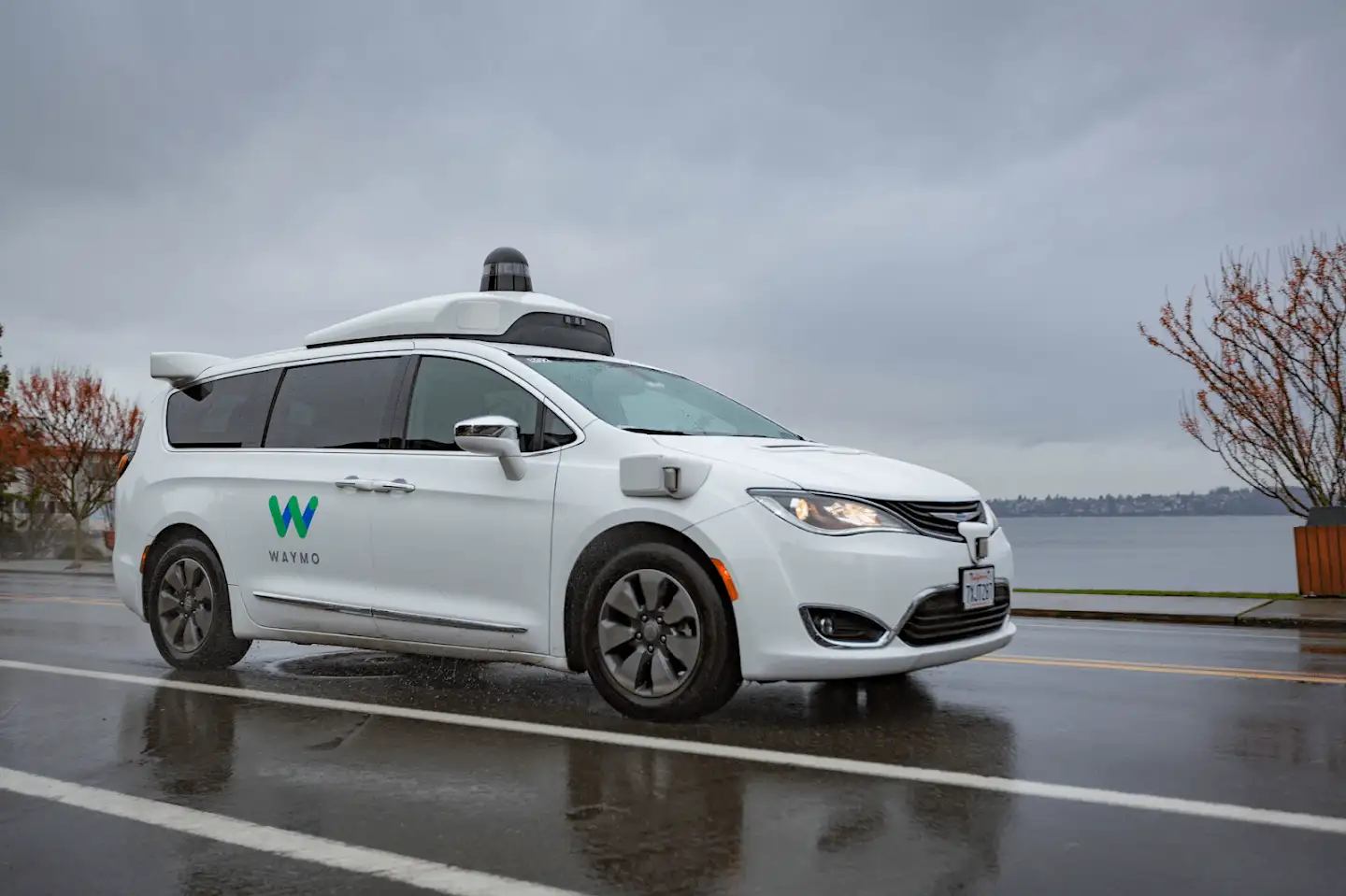
 Waymo Chrysler Pacifica hybrid robotaxi operating in wet weather conditions. Source: Waymo
The autonomous-driving industry began to encounter the enormous complexity of the long tail. Although the demonstrations were getting better, the edge cases were not disappearing, as rain, fog, snow, and glare could degrade sensors, construction could invalidate maps, road markings could disappear, emergency vehicles could behave unpredictably, and pedestrians or cyclists could make decisions no algorithm could perfectly anticipate. Furthermore, humans are remarkably good at dealing with ambiguity, making immediate contextual judgments when seeing a strange object in the road. A machine must turn that ambiguity into data, probability, and action, making the difference between "probably safe" and "safe enough to operate without a human" enormous.
That difference became one of the central reasons the industry's timeline stretched. The problem was not that autonomous vehicles stopped working, but that making them work reliably enough was vastly harder than making them work in demonstrations.
The Startup Effect: Acceleration, Not Magic
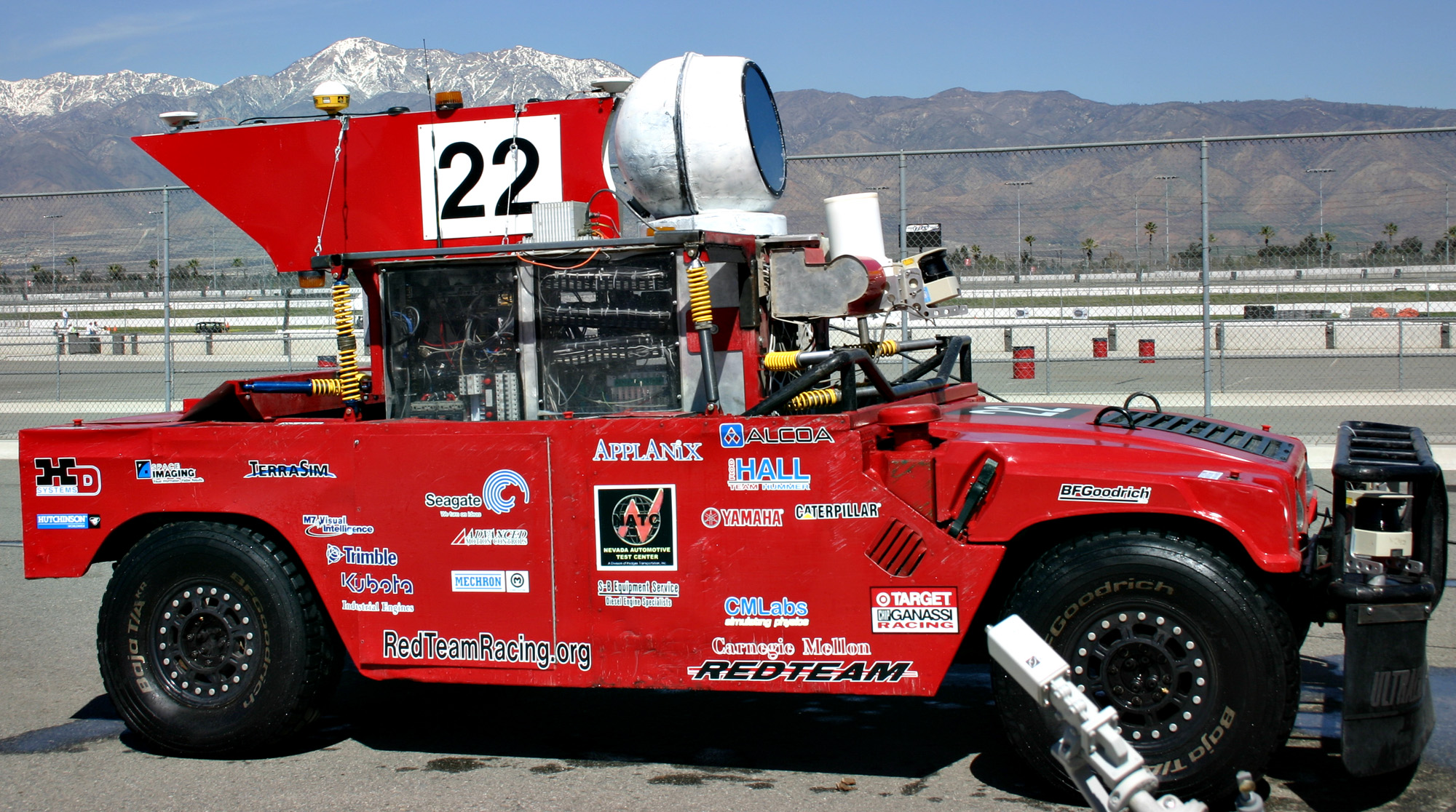
While the startups did not solve autonomous driving overnight, they fundamentally industrialized the search for a solution—a distinction that matters because it reveals an industry that wasn't failing from a flawed core idea, but rather one coming to terms with the true scale of the problem. The startup boom accelerated the field as companies competed over sensor configurations, compute platforms, mapping strategies, neural-network architectures, and business models. They built test fleets, accumulated millions of miles, developed simulation environments, created new tools for collecting and labeling data, and attracted researchers who previously might have worked in academia or other technology industries. In doing so, they forced traditional automakers to confront the possibility that the vehicle could become a software-defined machine.
The Capital That Bought the Future
Autonomous driving became one of the most heavily financed technology bets of the late 2010s and early 2020s. In 2017, startups developing autonomous-vehicle technology attracted 76% of the investment dollars going into the AutoTech startup sector tracked by CB Insights, and by 2018, it had become the dominant destination for auto-tech capital with enormous rounds going to Cruise, Zoox, and Nuro. By October 2021, autonomous-driving companies had raised more than $12 billion in equity funding during the year, according to CB Insights. However, a key detail was hidden inside the headline: deal counts had declined significantly even as total funding increased, with "Smart Money" investors increasingly concentrating on later-stage companies as they tried to identify who might actually commercialize the technology.
The largest investors were not all traditional venture-capital firms. SoftBank's Vision Fund became one of the defining sources of capital during the first autonomous-driving boom, investing $2.25 billion into GM's Cruise and $940 million into Nuro. Automakers and technology companies also provided enormous strategic capital, including GM, Ford, Volkswagen, Toyota, Honda, and Amazon. Among traditional venture investors, Andreessen Horowitz, Accel, and Sequoia Capital were particularly active, with CB Insights identifying Andreessen Horowitz as the most active of its 25 "Smart Money" investors in autonomous driving since 2016 (10 deals), followed by Accel (8 deals) and Sequoia (7 deals).
The most revealing example was Waymo, which raised its first external financing round in March 2020 at $2.25 billion, later expanded to $3 billion and ultimately reported at $3.2 billion, led by Silver Lake, Canada Pension Plan Investment Board, and Mubadala, with participation from Magna, Andreessen Horowitz, AutoNation, and Alphabet. In 2021, Waymo raised another $2.5 billion. These abnormal startup rounds reflected the realization that autonomous driving was not only an AI challenge, but a capital-intensive infrastructure challenge requiring vehicles, sensors, computing, simulation, data collection, safety validation, mapping, remote operations, insurance, maintenance, and fleet operations.
When the investment cycle turned, funding became much more selective and concentrated around companies with demonstrated technology, deployments, partnerships, or a route to revenue. In early 2026, Waymo raised $16 billion, valuing the company at $126 billion in a round led by Dragoneer Investment Group, DST Global, and Sequoia Capital, with participation from Andreessen Horowitz, Mubadala Capital, Bessemer Venture Partners, Silver Lake, Tiger Global, and T. Rowe Price. According to S&P Global Market Intelligence, this helped push global autonomous-vehicle transaction value to $23.26 billion in just the first four months of 2026—above every full-year total recorded since at least 2017.
As the market matured, the capital requirements shifted from financing the initial technology race to financing deployment at scale, a transition that represents one of the most critical economic developments in the history of autonomous driving. The industry moved from asking who can build a self-driving system? to who can deploy one at sufficient scale to generate a return on capital?, changing the winner from the company with the most impressive demonstration to the one that can turn autonomous driving into a repeatable economic system.
The Robotaxi Becomes the Practical Path
One of the most important strategic conclusions to emerge was that autonomous driving did not necessarily need to arrive first in privately owned cars. Robotaxis offered a more controlled environment where a company could begin with a defined geographic area, map roads in detail, select operating hours, define weather limitations, monitor the fleet, maintain vehicles, and potentially deploy the same autonomous system across a large fleet of vehicles. This changed the economics and engineering logic by reframing the question from when will every car drive itself? to where can autonomous vehicles operate safely and economically today? That shift made robotaxis the most prominent early commercial application of Level 4 autonomy.
The Business Model: Who Gets Paid When the Car Drives Itself?
Technology alone does not determine whether autonomous driving becomes a successful industry; someone has to make money from it. Answering who owns the vehicle, the autonomous system, the customer, the data, and who handles operations, insurance, and maintenance reveals several possible models:
Own and operate the robotaxi: The simplest model is also the most capital-intensive. An autonomous company owns the vehicles, operates the fleet, and collects the passenger fare. While capturing the entire transaction, the company carries almost every cost, including financing, maintenance, insurance, cleaning, charging, depot management, and service operations.
Autonomous Driving as a Service: A different model separates technology from the fleet. Aurora has explicitly described a Driver-as-a-Service model in which fleet customers or third parties own, manage, and maintain the vehicles while Aurora provides the autonomous system and charges based on usage, such as a fee-per-mile model. This dramatically reduces capital requirements, transforming the autonomous company into a technology supplier.
Licensing the technology: Licensing technology directly to automakers allows the carmaker to provide the vehicle, manufacturing scale, and customer relationship while the autonomous company provides the software, sensors, computing architecture, or complete driving stack. This offers massive scalability without requiring the technology company to operate millions of vehicles itself.
Revenue sharing: A hybrid model divides economics among an autonomous technology provider (supplying the driver), automaker (vehicle), fleet operator (capital and operations), and mobility platform (customers).
Because autonomous mobility is becoming an ecosystem rather than a single-company product, the central question changes from wanting to own the world's robotaxis to wanting to power them.
The Battle for the Value Chain
Beyond business models, the autonomous-driving race is a battle over the key assets of the value chain: the vehicle, the autonomous driver, sensors and compute, the fleet, the customer relationship, data, physical infrastructure, deployment capital, and insurance/liability. This explains why apparent competitors also become partners. An autonomous company does not need to become an automaker, an automaker does not need to build the entire stack, a ride-hailing company does not need to develop its own driver, and a fleet operator does not need to own the AI. The eventual industry could resemble the smartphone ecosystem, with different companies controlling different layers.
The Economics Problem
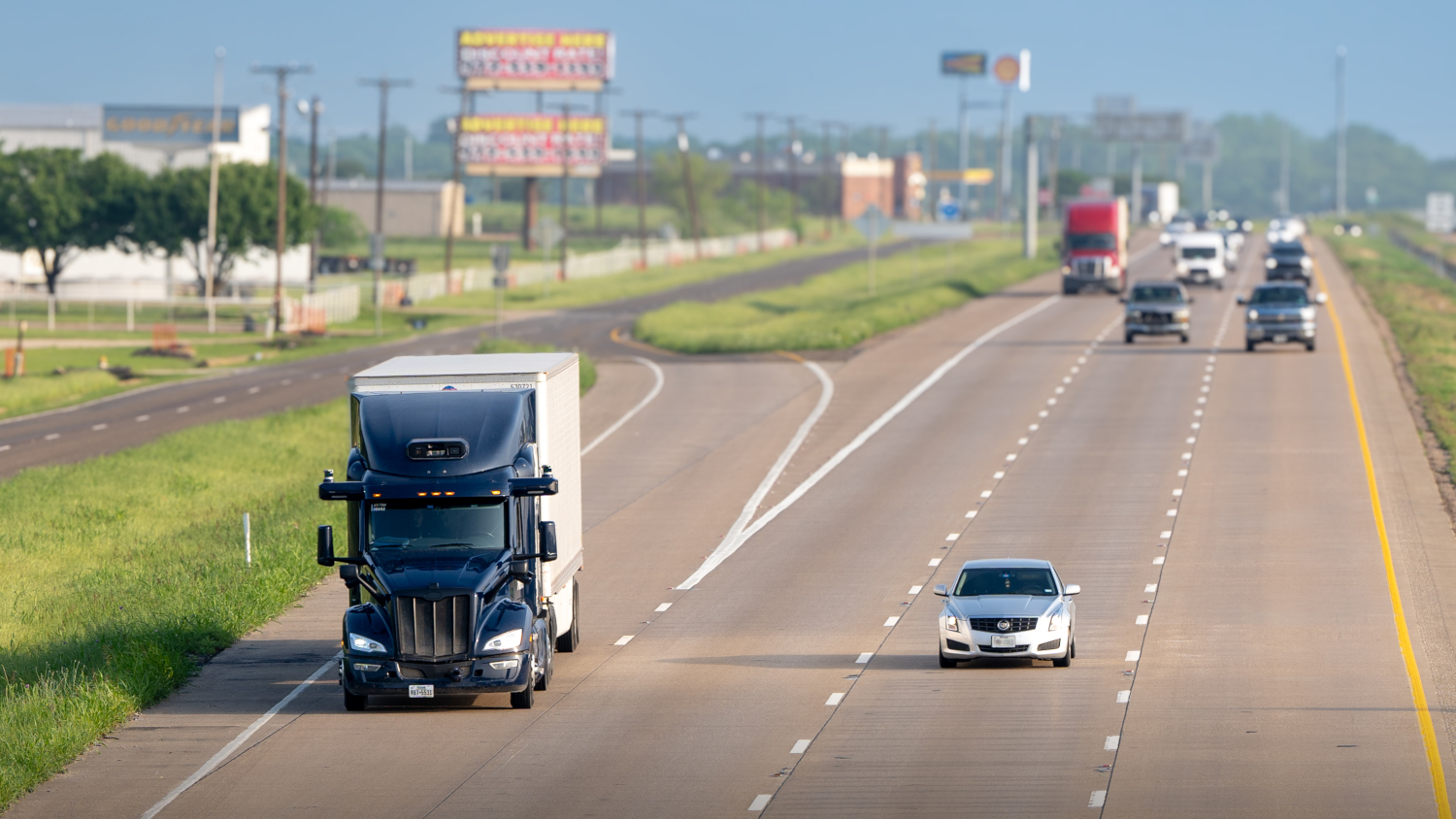 Long-haul autonomous trucking operating on highway freight corridors. Source: Aurora
This is where original forecasts encountered another obstacle: while a prototype can use expensive sensors, large computing power, and a substantial engineering team, a mass-market private vehicle cannot. Private car owners may not pay thousands of dollars for a system that only works in certain environments, whereas a robotaxi operator can distribute hardware costs across thousands of rides due to higher utilization.
Autonomous trucking presents a similarly attractive calculation if operations without a human driver directly improve labor utilization, vehicle utilization, and operating hours. However, these benefits must be weighed against hardware costs, remote supervision, maintenance, insurance, and fleet operations. The technology has to become not merely possible, but economically viable relative to alternatives in the markets it targets.