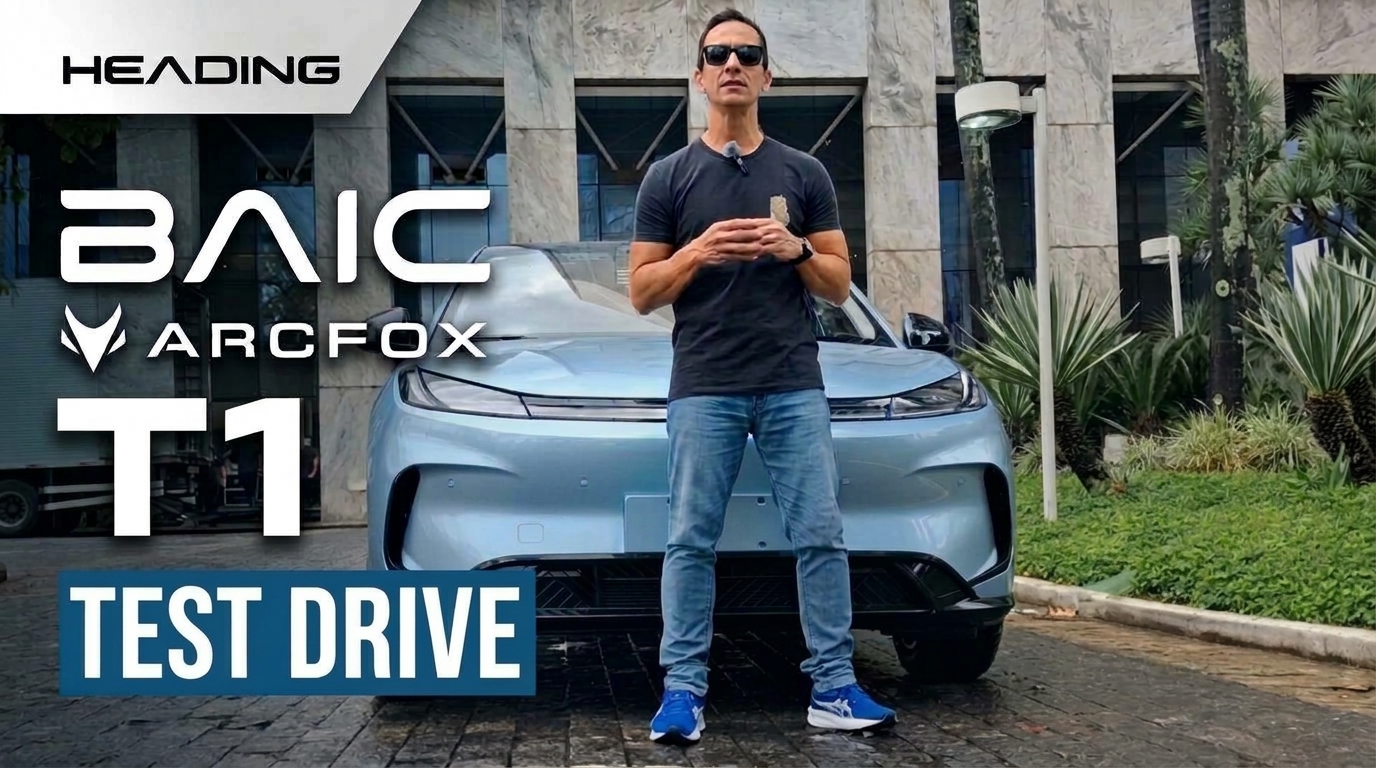
The failures of the American EV startup boom raise a broader question: if access to capital wasn't enough, what allowed other companies to move from electric-vehicle ambitions to industrial-scale production?
To understand that difference, the story needs to move away from Wall Street and toward China.
While U.S. investors were discovering a new generation of electric-vehicle startups, China had been building something different: not simply a group of EV companies, but an industrial ecosystem around electrification.
The distinction is important.
China's electric-vehicle industry did not emerge overnight, and it did not begin with a wave of highly valued startups entering the stock market. It developed through years of government policy, manufacturing investment, battery development, infrastructure expansion and growing domestic demand.
The country introduced its New Energy Vehicle (NEV) credit system in 2017, while subsidies, tax incentives, public procurement and local industrial policies helped accelerate the market. Charging infrastructure expanded alongside vehicle sales. Electric buses became increasingly common in Chinese cities. Battery manufacturers grew alongside automakers.
The result was a reinforcing cycle.
Policy support created demand. Demand created scale. Scale strengthened manufacturers and suppliers. Stronger suppliers lowered costs. Lower costs made vehicles more competitive. And more competitive vehicles created more demand.
By the time the global EV boom reached its peak in 2020 and 2021, China already possessed many of the industrial ingredients that startups elsewhere were still trying to assemble.
No company illustrates this more clearly than BYD.
The company did not begin as a conventional automaker and then decide to enter batteries. Its origins were in rechargeable batteries, and that experience became a major part of its automotive strategy.
Over time, BYD developed capabilities across batteries, power electronics, electric drivetrains and vehicle manufacturing. Its approach gave the company greater control over critical components and allowed it to integrate technologies that other automakers often had to purchase from suppliers.
The Blade Battery became one expression of that strategy.
The important point was not simply the battery itself. It was the industrial capability behind it.
By controlling more of the value chain, BYD could coordinate product development, battery technology and vehicle manufacturing in a way that was difficult for a startup with limited scale to replicate.
The company also benefited from something the American startups were desperately trying to create: volume.

BYD's Blade Battery illustrates the company's vertically integrated approach to electric mobility. Its battery expertise, developed over decades, became a foundation for its expansion into vehicle manufacturing.
Large production volumes make it easier to amortize factories, engineering and tooling. They give suppliers incentives to invest. They create purchasing power. They generate data from millions of vehicles. They allow manufacturing processes to be refined continuously.
But scale creates another advantage that is sometimes overlooked: speed.
When suppliers, engineering teams, component manufacturers and production facilities operate within a closely connected ecosystem, the distance between developing an idea and implementing it can become considerably shorter.
Components can be adapted, production processes modified and new technologies integrated without having to build every capability from scratch.
This ability to iterate quickly matters in an industry where battery technology, vehicle software, electronics and consumer expectations continue to evolve.
Scale becomes an advantage that feeds on itself.
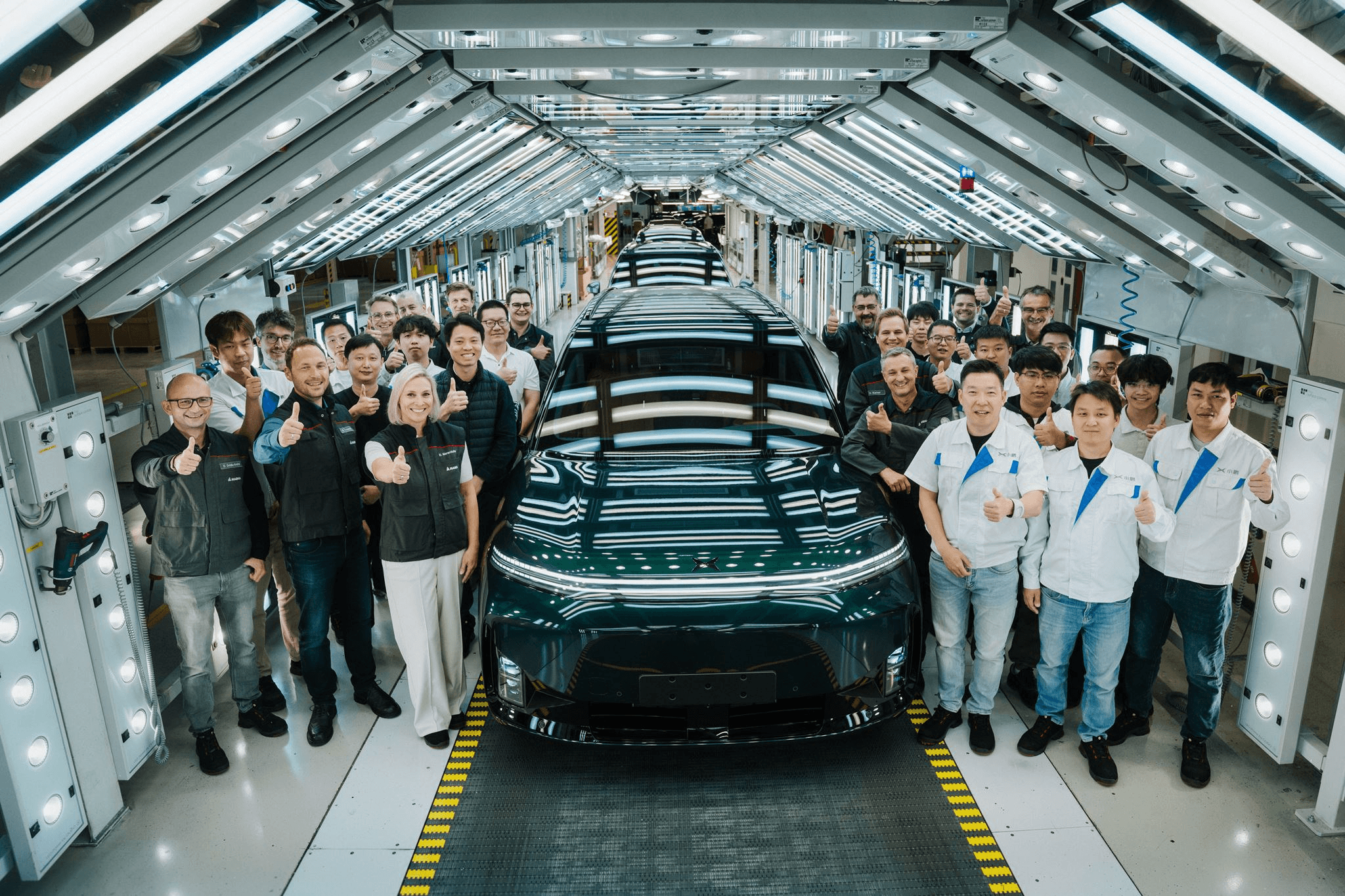
XPeng vehicles leave the assembly line. The production process illustrates the industrial scale behind China's EV industry, where automakers operate within a broader ecosystem of battery, component and manufacturing suppliers.
But China did not build its EV industry through vertical integration alone.
Other companies pursued different strategies.
NIO focused on the premium end of the market and built an ecosystem around the ownership experience. Its battery-swapping network became one of its defining ideas, allowing compatible vehicles to exchange depleted batteries for charged ones in a matter of minutes.
The concept required infrastructure, standardization and capital.
But that is precisely the point.
NIO was not treating the electric vehicle as an isolated product. It was building a system around it.
Its Battery as a Service model went further, separating the battery from the vehicle purchase in an effort to reduce the upfront cost for customers and create a different relationship between the automaker and its energy infrastructure.
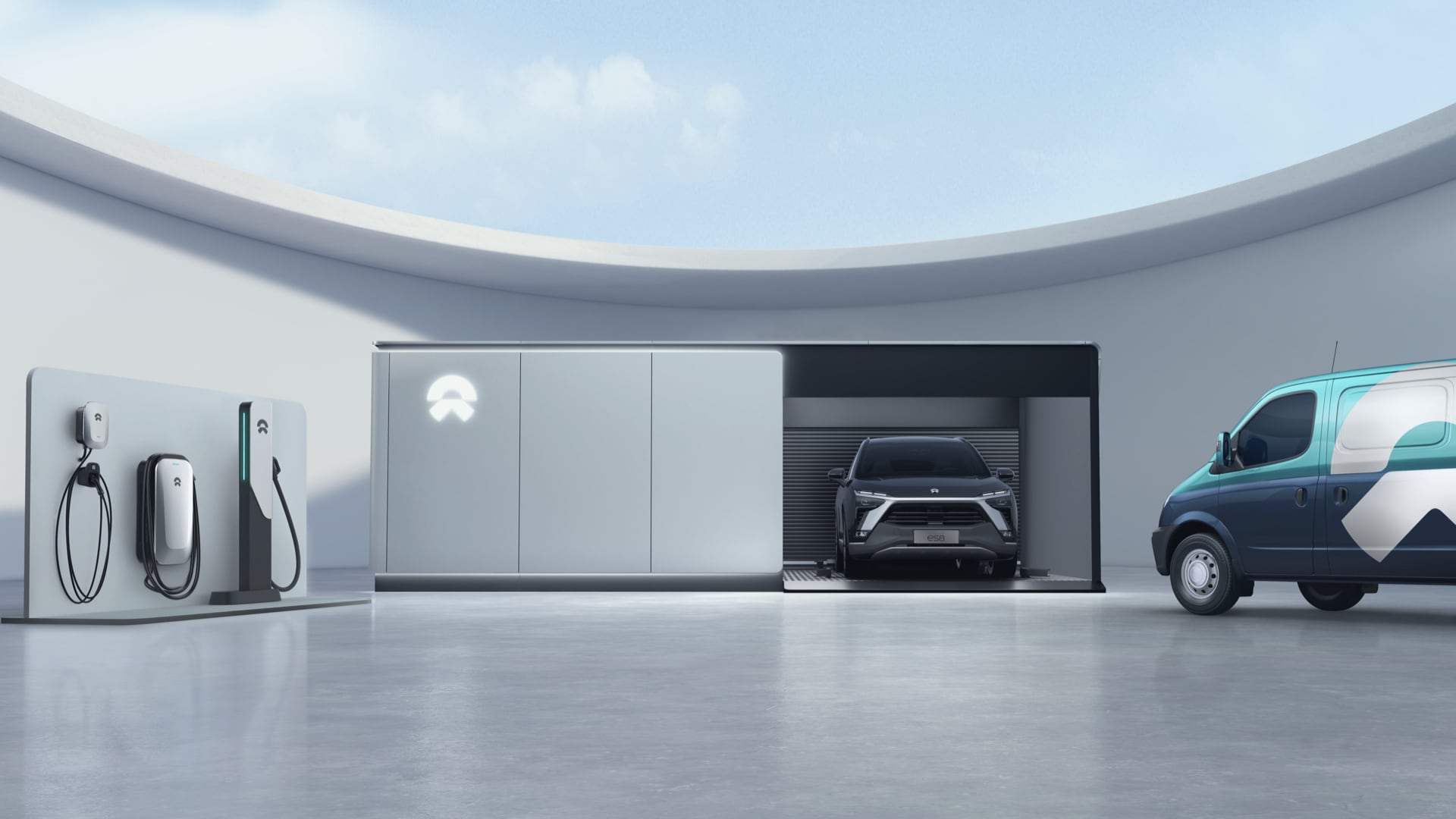
NIO's battery-swapping system. Instead of recharging the vehicle's battery, the system replaces the depleted pack with a fully charged one, making battery swapping part of the company's broader EV ownership and energy infrastructure strategy.
XPeng followed another path.
The company placed greater emphasis on software, intelligent driving and the digital architecture of the vehicle. It invested in its own technological capabilities while also developing increasingly sophisticated manufacturing operations.
Once again, the difference was not that Chinese companies had discovered some secret formula.
They were operating inside a much larger ecosystem.
Battery manufacturers were already there. Electronics suppliers were already there. Component manufacturers were already there. Charging networks were expanding. Engineering talent was available. Domestic consumers were increasingly familiar with EVs.
The automakers were not building everything from zero.
This distinction also requires some perspective. The United States was not starting without an automotive industry, established manufacturers or engineering expertise. It had decades of automotive manufacturing experience and a substantial supplier base.
The difference was the degree to which China's industrial ecosystem had developed around electrification itself.
Batteries, power electronics, EV components, charging infrastructure and vehicle manufacturing had become increasingly interconnected. Many American startups, meanwhile, were attempting to establish new automotive businesses while simultaneously developing or securing the technologies, suppliers and production capabilities required to compete.
That does not mean the Chinese model guaranteed success.
It did not.
China's EV industry also produced failures, financial distress and consolidation. Not every startup survived. Companies disappeared or were absorbed. Competition became increasingly intense. Price wars compressed margins, while concerns about overcapacity and the long-term profitability of the industry grew.
Government support could accelerate an industry.
It could not guarantee that every company would survive.
That is an important part of the comparison.
The difference between the United States and China was not simply that one country had successful EV companies and the other had failures. Both had successes and failures.
The difference was the industrial context in which those companies emerged.
In the United States, the EV startup boom of 2020 and 2021 was heavily shaped by financial markets. Companies raised large amounts of capital, presented ambitious production targets and were valued on expectations of future growth.
China's EV expansion was built within a broader manufacturing ecosystem that had been developing for years.
This does not make one model inherently superior.
It means that the same amount of capital can produce very different results depending on the ecosystem surrounding the company.
A startup entering an established supply chain does not have to create every capability itself. A company operating without that network must spend more time and money building it.
This is where the story of the U.S. EV startups becomes more interesting.
The problem was never simply that they had raised too much money.
In many cases, they had raised money because the market correctly recognized that electrification was going to transform the automobile industry.
The mistake was assuming that identifying the transformation was equivalent to being able to execute it.
The SPAC boom compressed the distance between those two ideas.
A company could go from startup to publicly traded business with a multibillion-dollar valuation before it had proven that it could manufacture vehicles at scale.
That did not necessarily mean the company was fraudulent, irrational or doomed.
It meant the market was making a bet on the future.
And the future turned out to be much more expensive to build than many investors expected.
There is another important complication.
Not every American EV company that raised large amounts of capital through public markets failed. And not every Chinese EV company became a success simply because it operated inside a strong industrial ecosystem.
The survivors matter because they show that capital and industrial capability are not opposing explanations.
They are complementary.
Building an automotive company requires both.
Capital can pay for factories, engineering, batteries, software and people. But capital becomes far more productive when it is combined with manufacturing knowledge, supplier relationships, technology and sufficient market demand.
That may be the deeper lesson of the EV boom.
The market was right about the direction.
Electric vehicles did become one of the most important transformations in the automotive industry. Batteries became strategically critical. Software became increasingly important. New suppliers emerged. Traditional automakers accelerated their electrification programs. China became the world's largest EV market and a central manufacturing base for the industry.
What the market underestimated was the industrial distance between an idea and a sustainable automaker.
That distance cannot be crossed by a valuation.
It cannot be crossed by a presentation.
And it cannot be crossed simply by putting a prototype on a stage.
It requires factories that work, suppliers that deliver, batteries that can be produced at scale, software that functions reliably, vehicles that customers want, service networks that support them and enough capital to survive the years before the economics finally begin to work.
That is why the story of the U.S. EV startup boom is not simply a story about SPACs.
It is a story about the difference between financing an industry and building one.
The investors of 2020 correctly saw that the automobile was entering a profound technological transition. What many of them underestimated was the amount of industrial infrastructure required to turn that transition into a sustainable business.
The electric-vehicle revolution was real.
The shortcut was not.
The market correctly identified the direction of the automotive industry—but underestimated how difficult it would be to build the companies capable of leading it.
But the industrial ecosystem is only part of the story.
Having a strong domestic manufacturing base does not automatically translate into global competitiveness. As Chinese manufacturers expand beyond their home market, they face a different set of challenges: trade barriers, tariffs, geopolitical tensions, local manufacturing requirements and established competitors.
The next question is whether the advantages developed inside China can be sustained when these companies compete on a global scale.