XPENG is extending its ambitions beyond electric vehicle manufacturing with XPENG YOYO, the brand under which it is developing its Robotaxi business. The initiative represents a different approach to autonomous mobility: rather than focusing exclusively on developing self-driving technology, the Chinese automaker is combining its vehicle platforms, software, artificial intelligence and manufacturing capabilities into an integrated solution intended for mobility operators.
The move places XPENG in a competitive field that includes established autonomous-driving companies such as Pony.ai, WeRide and Baidu Apollo Go, while also creating an interesting comparison with Tesla's efforts to build its own Robotaxi network.
However, XPENG's strategy is not simply about putting autonomous vehicles on the road. It is an attempt to extend the economics and capabilities of an automotive manufacturer into a new mobility business.
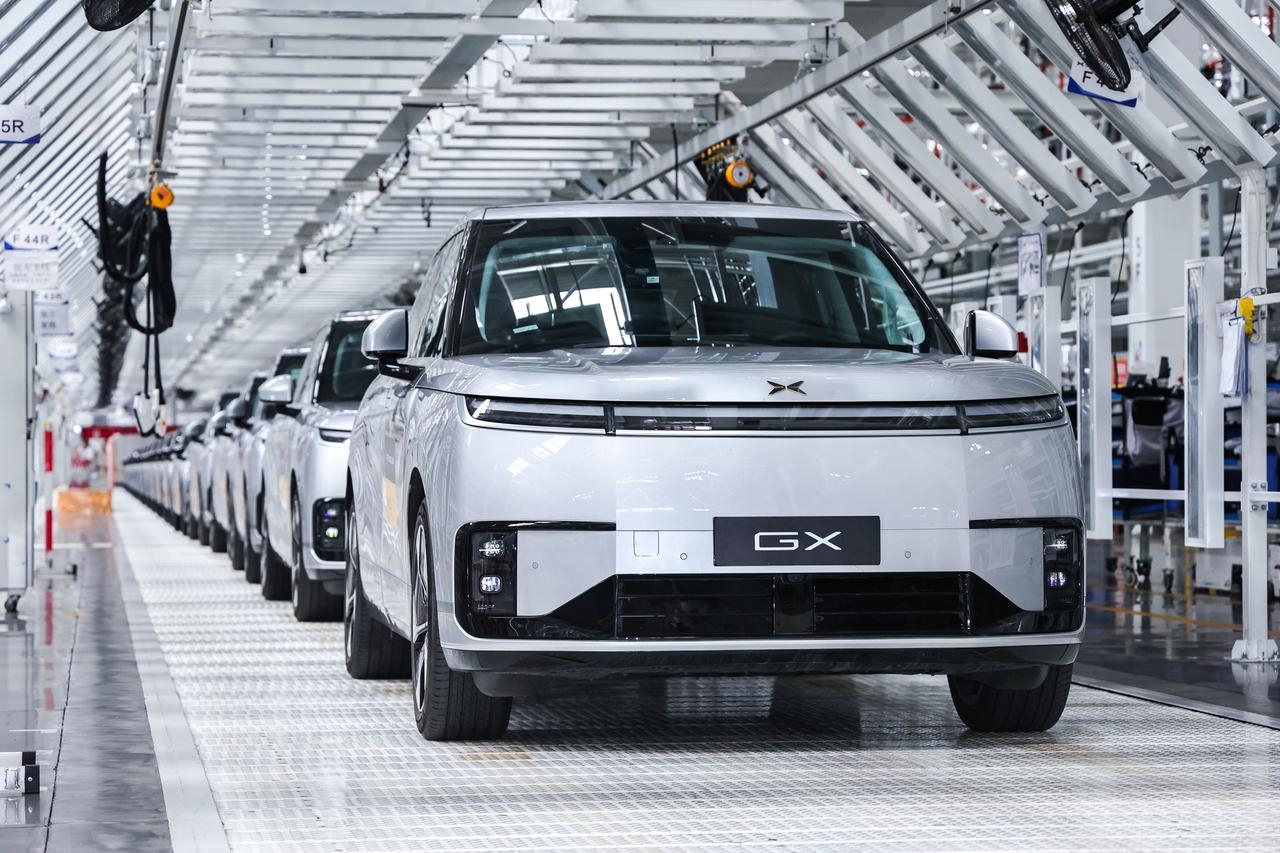
XPENG's GX-based Robotaxi, officially branded XPENG YOYO, is designed to extend the company's in-house vehicle and AI technologies into autonomous mobility services.
From Autonomous Driving Development to Robotaxi Operations
XPENG's Robotaxi program moved into a more tangible industrial phase in May 2026, when the company announced that its first mass-produced Robotaxi had rolled off the production line in Guangzhou.
Built on the company's GX platform, the vehicle was developed using XPENG's in-house technologies, including its autonomous-driving software, computing hardware and artificial intelligence systems. The company presented the vehicle as a production-ready platform designed for Level 4 autonomous driving.
The development process accelerated throughout the year. XPENG established a dedicated Robotaxi business unit in March, responsible for product definition, research and development, testing and operations.
In July, the company completed what it described as a full operational validation process, including ride-hailing, automated vehicle pickup and passenger drop-off. In August, it obtained qualification for remote road testing on designated roads in Guangzhou without a safety operator in the driver's seat.
On October 8, XPENG officially introduced the YOYO name and opened online registration in China through an invitation-based system. The branding gave the initiative a distinct identity as it moved closer to public-facing mobility services.
The next milestone arrived on October 26, when XPENG received approval to conduct intelligent connected vehicle demonstration operations across Guangzhou. This enables the company to demonstrate L4 Robotaxi operations across the city and test the complete service process, including order response, vehicle dispatch, passenger pickup and exception handling.
The distinction matters. Demonstration-operation approval is an important step toward commercialization, but it should not be confused with unrestricted commercial deployment or proof of a profitable service. XPENG says the initial rollout will expand gradually through invitation codes, with operational experience used to refine fleet management and service efficiency.
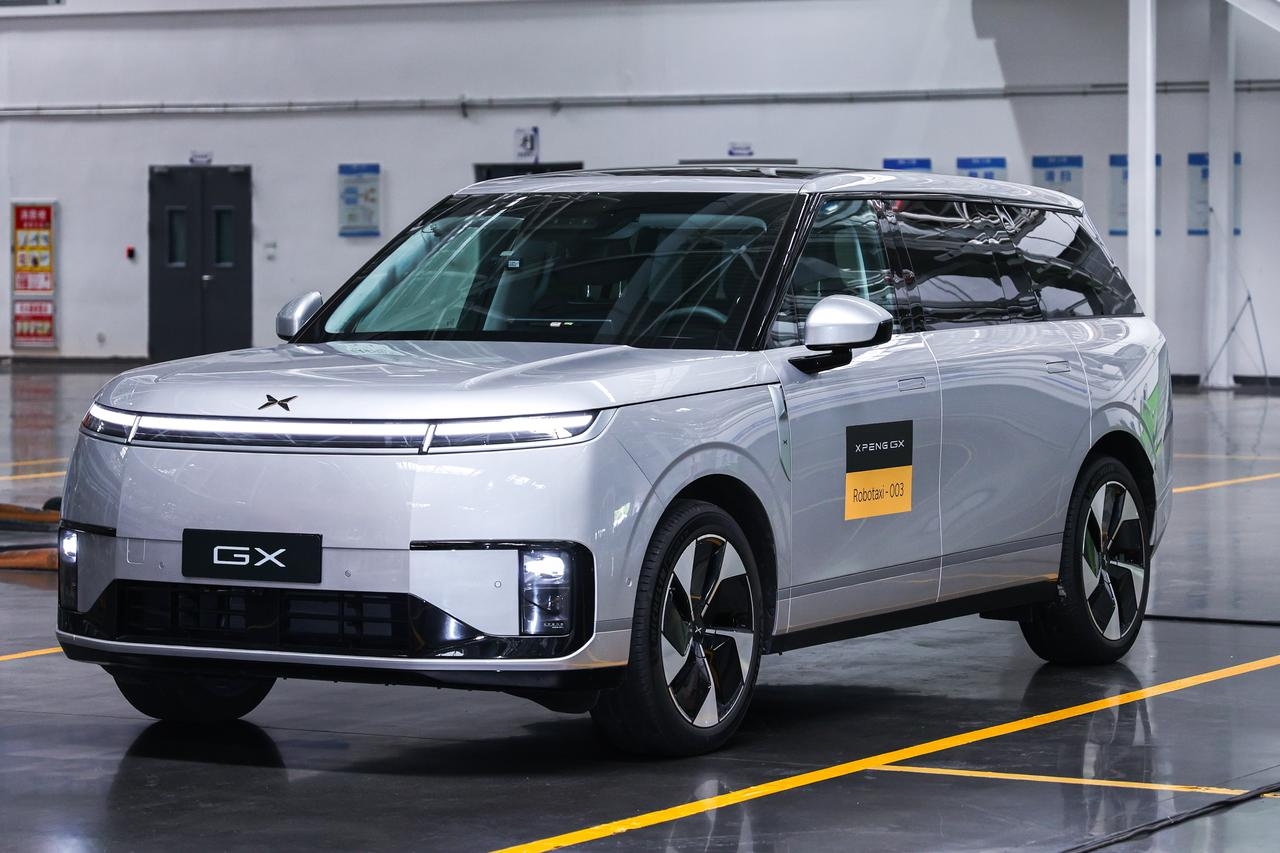
XPENG's first mass-produced Robotaxi, built on the GX platform, during the company's production rollout in Guangzhou in May 2026.
The Technology Behind YOYO
The technical foundation of YOYO is closely connected to XPENG's broader AI and intelligent vehicle development.
The Robotaxi is equipped with four in-house Turing AI chips, providing a claimed computing capacity of 3,000 TOPS. It also uses the company's VLA 2.0 architecture, which XPENG describes as a key component of its approach to autonomous driving.
Unlike systems that rely on LiDAR sensors and high-definition maps, XPENG's solution uses a camera-based, vision-only approach. The company argues that this architecture can reduce hardware complexity and improve adaptability across different road environments.
XPENG also claims that its VLA 2.0 architecture can achieve system response latency below 80 milliseconds. These specifications are part of the company's technical proposition, although computing capacity and response times alone do not establish real-world autonomous-driving performance or demonstrate an advantage over competing systems.
The vehicle's passenger experience is another part of the proposition. The cabin includes privacy glass, comfort-oriented seats and rear entertainment screens, with passengers able to interact with vehicle functions through an integrated voice assistant.
This reflects an important difference between conventional electric vehicles and purpose-built autonomous mobility platforms. Without a human driver, the cabin becomes part of the service experience rather than simply a passenger compartment.
A New Business Within XPENG
The strategic significance of YOYO becomes clearer when looking at how XPENG intends to make money from it.
CEO He Xiaopeng has described the Robotaxi business as a technology provider and ecosystem enabler rather than an operation focused on directly managing large fleets. The company plans to supply integrated solutions to mobility partners through its vehicle platforms, autonomous-driving software and AI capabilities.
Under this model, revenue could come from vehicle hardware sales, technology services and commission-sharing arrangements. Local partners would take responsibility for much of the operational side of the service.
XPENG has also said it is in advanced discussions with several European mobility platforms, suggesting that international partnerships could become an important part of its expansion strategy.
This approach has potential advantages. Operating a large Robotaxi fleet requires significant capital, local regulatory knowledge, fleet management, customer service, charging infrastructure and maintenance capabilities. Working with established mobility operators could allow XPENG to expand into new markets without having to build every operational layer itself.
It also creates a different economic proposition. Rather than earning primarily from passenger fares, XPENG could capture value through vehicle production, software licensing, technology services and recurring participation in the revenue generated by partner-operated fleets.
The challenge is that this model depends on partners being able to operate the service efficiently. XPENG may control the vehicle and technology, but the quality and economics of the passenger experience will also depend on the companies responsible for deployment and daily operations.
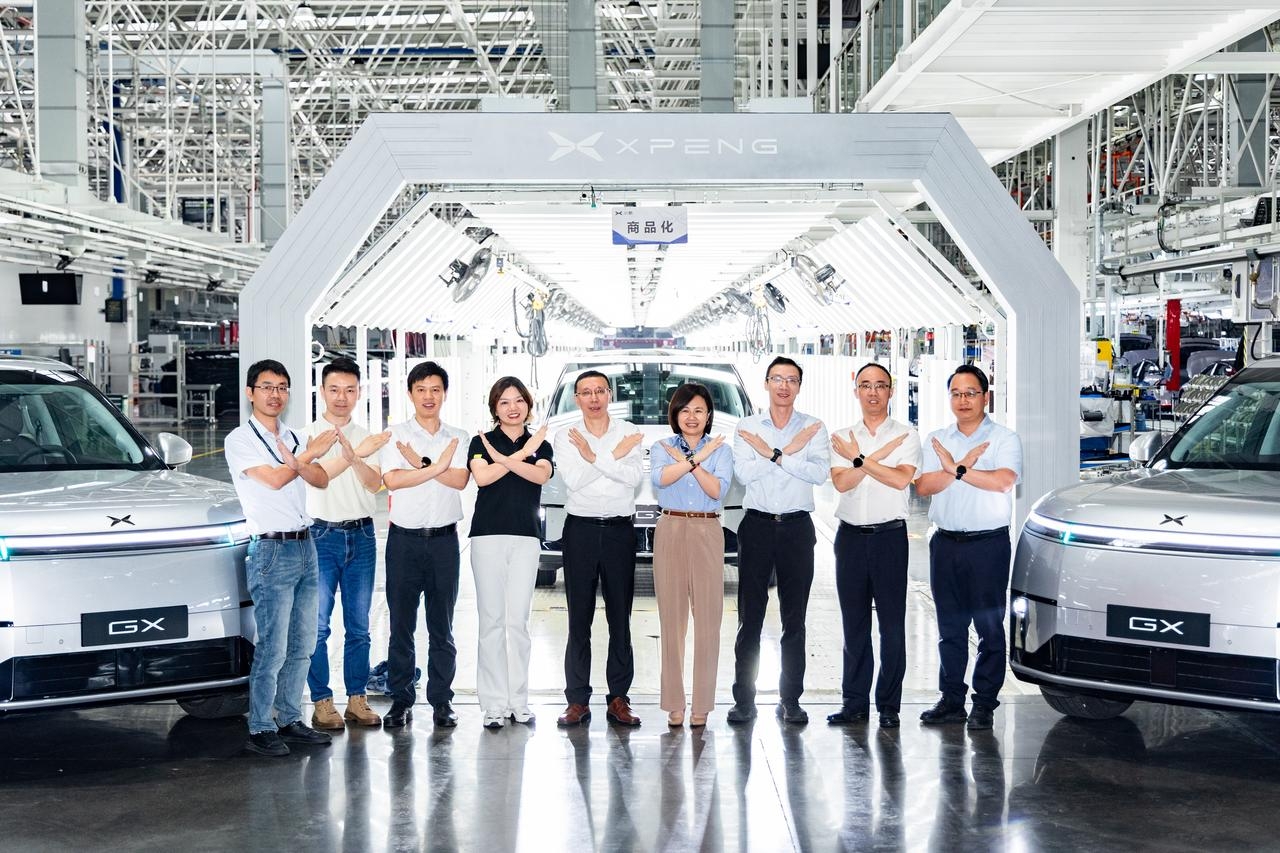 Multiple XPENG Robotaxi vehicles at the company's Guangzhou facility. The manufacturer intends to combine vehicle production with autonomous-driving technology and partnerships for service operations.
The Automotive Manufacturer's Potential Advantage
XPENG's entry into Robotaxis reflects a broader change in the competitive landscape. Autonomous mobility is no longer exclusively the domain of technology companies developing self-driving systems. Automakers with strong software, computing and manufacturing capabilities are increasingly looking to participate in the sector.
The potential advantage for XPENG is vertical integration. It develops the vehicle, controls much of the software and computing architecture, and can manufacture the platform at automotive scale. This could simplify hardware integration, reduce dependence on external suppliers and make it easier to adapt vehicles to the requirements of autonomous operations.
However, manufacturing capability is only one part of the equation.
Pony.ai, WeRide and Baidu Apollo Go have spent years developing autonomous-driving systems and accumulating operational experience. Their businesses are built around the deployment of autonomous vehicles, relationships with mobility operators and the gradual expansion of commercial services.
Their progress also provides a useful indication of the scale of the competition.
Pony.ai reported Robotaxi services revenue of US$12.1 million in the second quarter of 2026, an increase of 691.2% year over year. Its global Robotaxi fleet reached 1,975 vehicles at the end of June, while the company continued expanding through both direct operations and joint deployment arrangements.
WeRide reported total revenue of RMB231.7 million (approximately US$34.2 million) in the same quarter, up 82.2% year over year. Its global Level 4 fleet reached approximately 3,400 vehicles by July 31, including more than 1,800 Robotaxis. The company also reported an average of more than 21 daily rides per Robotaxi in China during the second quarter.
Baidu's Apollo Go represents a different scale of operational experience. By the second quarter of 2026, the company reported that its autonomous-driving fleets had accumulated more than 350 million autonomous kilometers globally, including over 240 million fully driverless kilometers. Its operations and partnerships had expanded to 28 cities.
These figures are not directly comparable: Pony.ai's Robotaxi services revenue, WeRide's total company revenue and Baidu's accumulated autonomous-driving mileage measure different aspects of their businesses. Nevertheless, they illustrate the operational experience and commercial infrastructure XPENG will need to compete with.
Tesla offers another useful comparison, but with a different strategic model.
Its purpose-built two-seat Cybercab is designed specifically for autonomous passenger transport and is intended to become part of the company's own Robotaxi network. Unlike XPENG's partner-oriented approach, Tesla is pursuing a more vertically integrated model around its own vehicles and mobility service.
A limited number of Cybercabs began commercial deployment in Austin, Texas, in September 2026. The rollout remains at an early stage, and the vehicle's regulatory position is still being examined. On September 4, the US National Highway Traffic Safety Administration opened an investigation into Tesla's self-certification of the Cybercab under federal vehicle safety standards. The investigation concerns the basis for certifying a vehicle without conventional driver controls; it is not, by itself, a finding of non-compliance.
The two approaches reveal different ways of entering the same business. XPENG wants to supply vehicles and technology to third-party mobility operators, while Tesla is building around an integrated vehicle and service platform. Each model carries different requirements for capital, operational control, partnerships and regulatory approval.
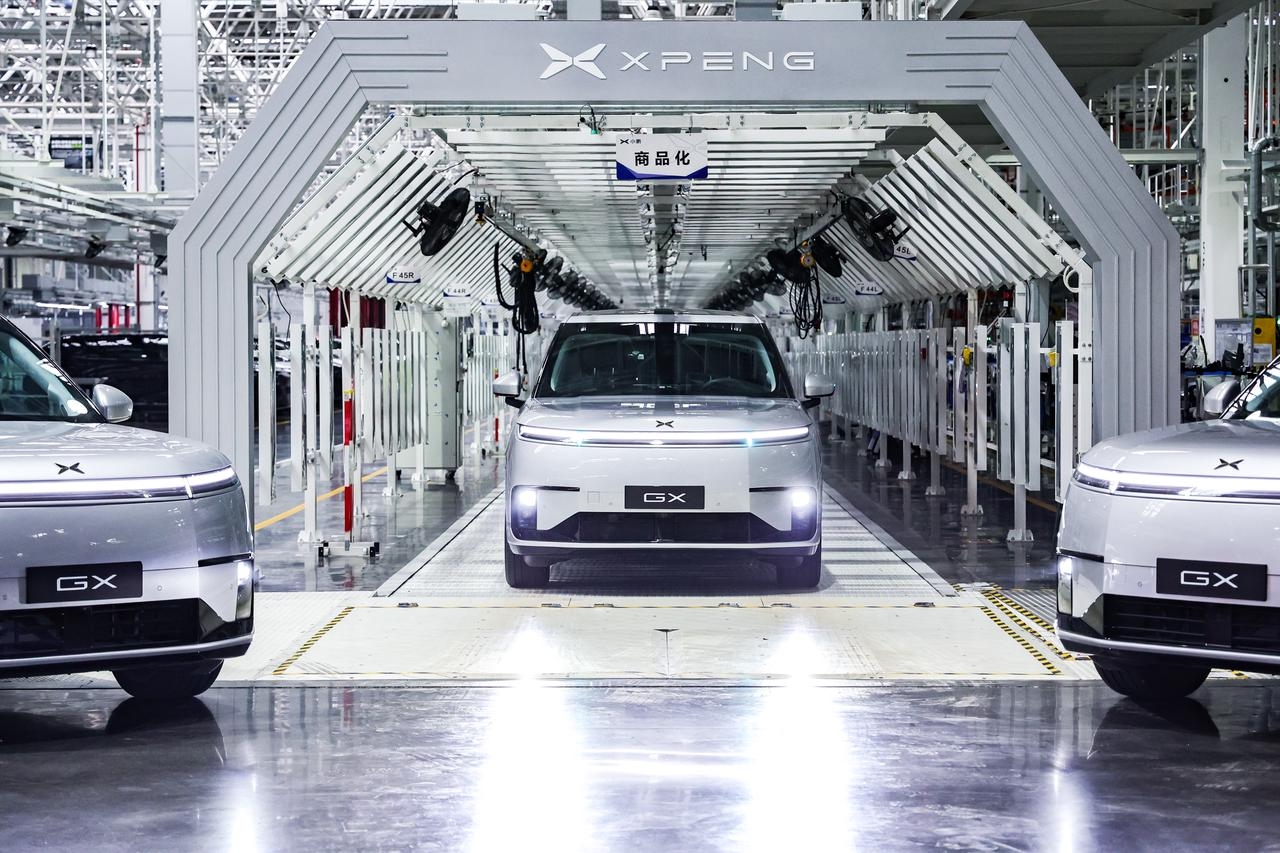
XPENG's GX-based Robotaxi at its Guangzhou manufacturing facility. The company sees its existing vehicle production capabilities as a potential advantage in scaling autonomous mobility.
A Different Kind of Competition
The Robotaxi industry is developing through several competing business models. Some companies are focused on autonomous-driving technology and fleet operations; others are building partnerships with established mobility platforms; and automakers such as XPENG and Tesla are looking to extend their existing vehicle and software capabilities into autonomous services.
The commercial figures suggest that the industry is moving beyond experimentation. Pony.ai is generating measurable Robotaxi services revenue, WeRide is expanding its fleet and international operations, and Baidu is accumulating autonomous-driving experience across multiple cities and markets.
But revenue growth and fleet size do not automatically translate into sustainable profitability.
The economics of autonomous mobility depend on more than the cost of the vehicle or the performance of its driving system. Fleet utilization, charging, maintenance, insurance, remote assistance, cleaning, depreciation and regulatory compliance all influence the cost of each completed journey.
Pony.ai's second-quarter results illustrate this challenge: despite strong Robotaxi revenue growth, its total gross margin was 17.5%, and operating expenses remained substantially higher than gross profit. WeRide, meanwhile, reported a negative EBITDA of RMB335.4 million for the quarter, despite its growing revenue and improving gross margin. These are company-wide figures, not isolated Robotaxi results, but they underline how much investment is still required to scale autonomous mobility businesses.
For XPENG, the opportunity is to use its existing automotive capabilities to enter this emerging industry without assuming the full burden of operating a large passenger fleet. Its manufacturing base, in-house computing hardware and software development could provide a competitive foundation, particularly if partnerships allow the company to expand internationally.
Yet the strategy still needs to be proven. XPENG must demonstrate that its technology can operate reliably in real-world conditions, that its vehicles can be maintained economically, and that mobility partners can turn the platform into a commercially sustainable service.
The longer-term question is not simply which company can build the most advanced autonomous vehicle. It is which business model can combine technology, manufacturing, operational efficiency and customer demand into a repeatable service.
For XPENG, YOYO is an attempt to make that transition — from building electric vehicles to supplying the hardware and intelligence behind a new form of mobility.