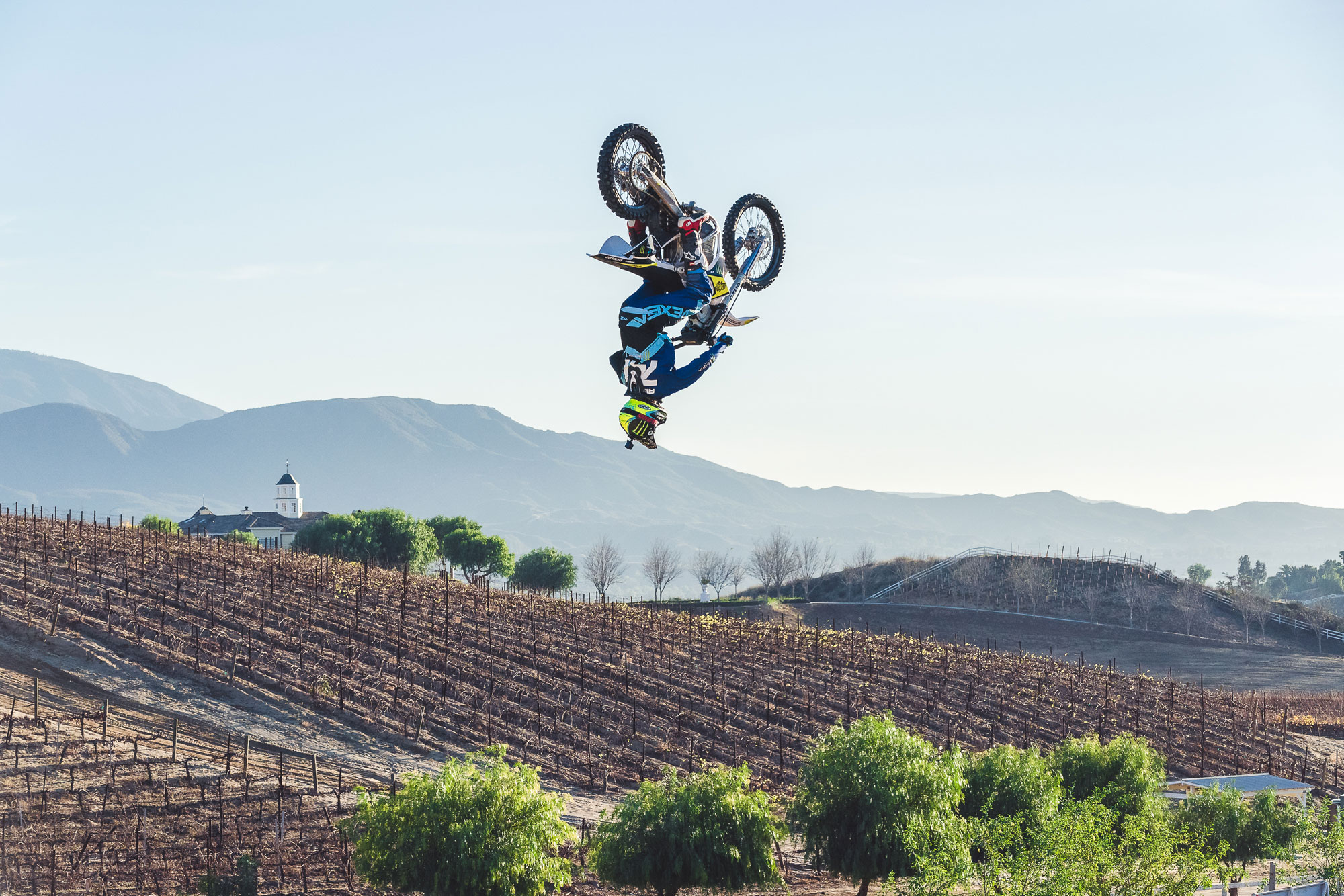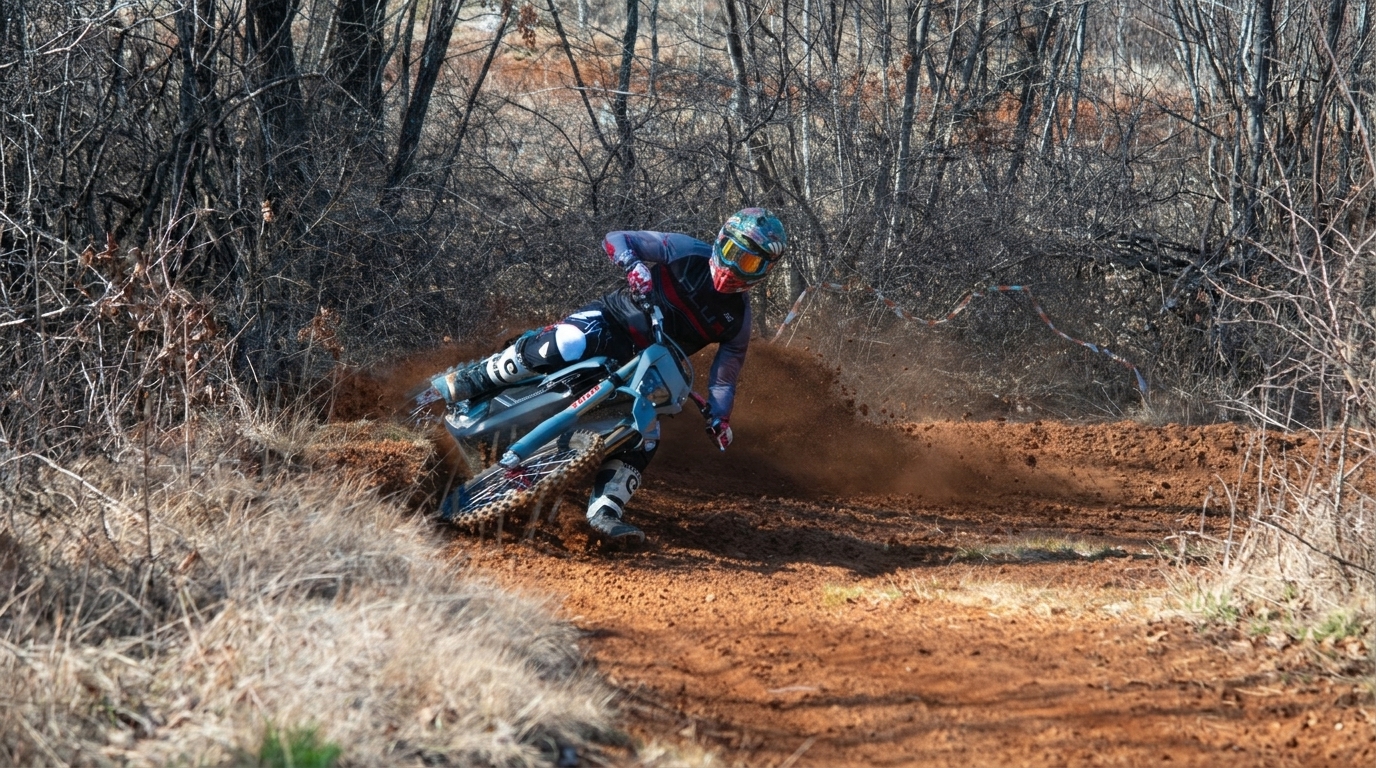
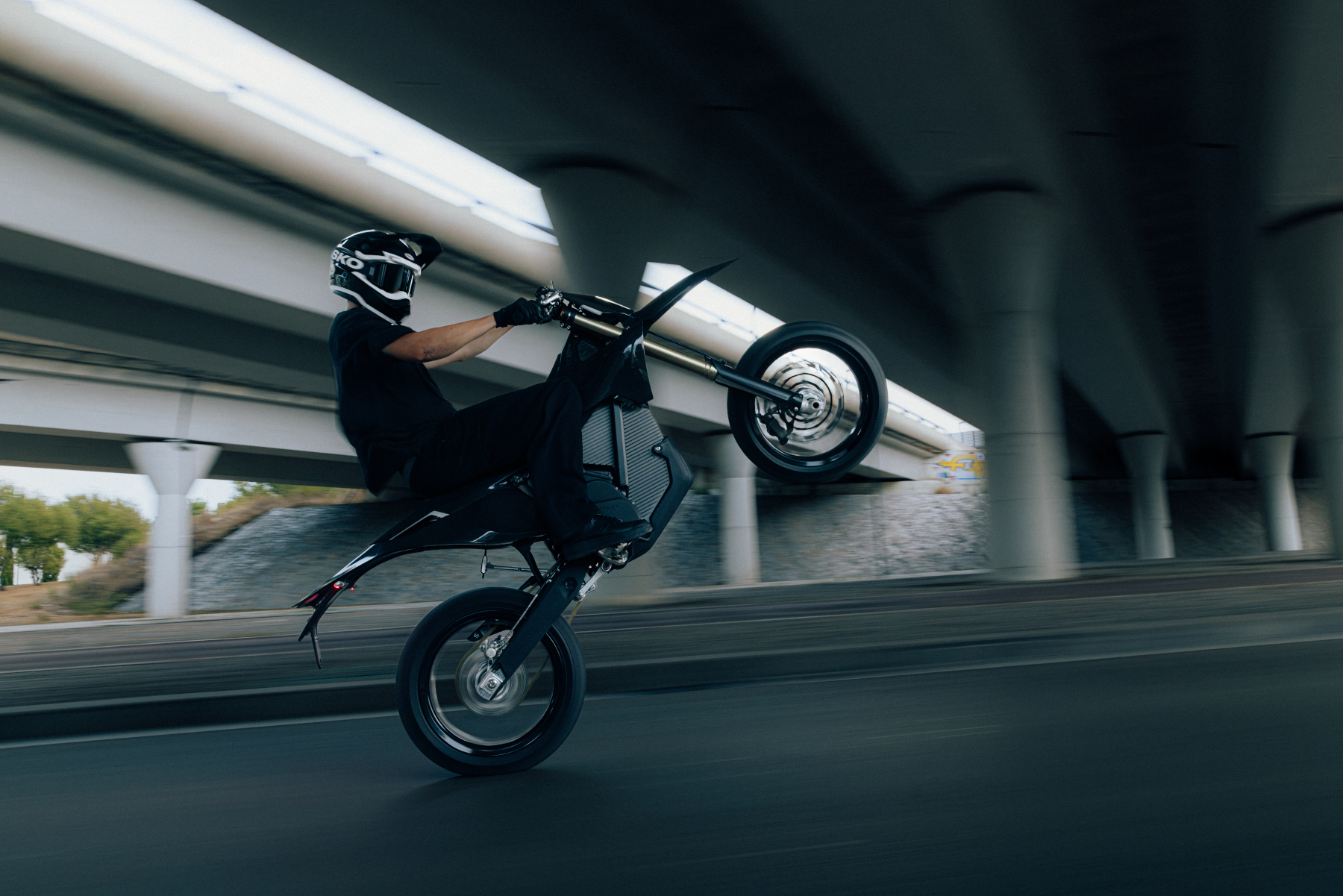
 The Stark VARG: electric performance challenging decades of combustion-powered off-road tradition. | Photo: Stark Future
For decades, the global off-road motorcycle market has been dominated by manufacturers whose competitive advantages were built around combustion engines, established racing programmes and extensive dealer networks. Honda, Yamaha, KTM, Kawasaki and a group of specialized European manufacturers have shaped the segment, developing products around generations of engineering experience and competition heritage.
Stark Future entered this environment with a different proposition.
Founded in 2020 and headquartered in Barcelona, the company set out to develop high-performance electric motorcycles capable of competing directly with established combustion-powered alternatives. Rather than approaching electrification as a compromise or a secondary product category, Stark positioned electric propulsion as the foundation of its performance strategy.
The VARG platform became the centrepiece of that approach. What initially appeared to be an ambitious attempt to challenge conventional motocross motorcycles has developed into a broader product family spanning motocross, enduro and supermoto.
More importantly, the company is beginning to demonstrate that its proposition can translate into meaningful commercial traction.
A Growing Position in a Traditional Market
Stark's strongest position so far has emerged in the specialist off-road segment, particularly enduro.
According to the company's January 2026 business update, Stark achieved more than 3% of the global enduro market in less than a year. Germany became a particularly important market, where the company reported approximately 50% market share in 2025. Similar performance was reported in several other European countries.
The VARG EX has become an important part of this expansion, while the VARG MX continues to establish the company's presence in motocross.
These figures are significant because Stark is competing against manufacturers with considerably larger industrial operations and decades of accumulated market presence.
However, market-share figures should be interpreted in context. Stark's reported global penetration is considerably more representative of its overall position than individual national results. The company's claims are also based on its own market calculations, rather than a publicly available global registration database.
Nevertheless, the direction is clear: Stark has moved beyond being an experimental electric motorcycle manufacturer and established a commercial presence in a segment traditionally dominated by internal combustion.
Growth Supported by Improving Financial Performance
The company's financial development provides another indication of its changing position.
Stark reported €115 million in revenue for 2025, representing 77% year-on-year growth. The company also reported achieving profitability in five of the final nine months of the year.
The momentum continued into 2026.
For the first half of the year, Stark reported revenue of €86 million, an increase of 46% compared with the same period in 2025. More significantly, the company achieved positive EBITDA and EBIT.
EBITDA reached €5.3 million, equivalent to a 6.1% margin, while gross margin improved to 39.6%. The company attributed the improvement partly to manufacturing efficiencies, sourcing improvements and lower per-unit production costs as volumes increased.
Stark delivered 8,124 motorcycles during the first six months of 2026, representing a 45% increase year-on-year.
The second quarter also established new monthly records for revenue, dealer sell-through and factory output, according to the company.
These results are important beyond their immediate financial implications. They suggest that Stark is beginning to benefit from manufacturing scale and improving unit economics while continuing to invest in technology and international expansion.
For a relatively young motorcycle manufacturer, achieving positive operating results while increasing production represents a meaningful milestone.
It is worth distinguishing this from net profitability and free cash flow, however. Those remain important indicators as the business expands.
How Big Can Stark Become?
The off-road market provides a relatively focused foundation, but it is unlikely to represent the full extent of Stark's ambitions.
In its January 2026 announcement, the company indicated that it was developing motorcycles for larger on-road and off-road categories, targeting markets with combined annual global volumes exceeding 55 million units.
That figure refers to the broader motorcycle categories Stark hopes to address, not the dirt-bike market alone.
The strategic logic is understandable.
Stark has developed expertise in high-performance electric powertrains, battery integration, motor control and software. These capabilities could potentially be transferred into other motorcycle categories, although each segment introduces different technical and commercial requirements.
The opportunity is substantial, but so is the competition.
Moving into larger motorcycle categories means competing with manufacturers that have enormous production capacity, established supplier relationships, extensive distribution networks and strong brand recognition.
Price competitiveness, range, charging infrastructure, reliability and after-sales support will become increasingly important.
The company will also need to demonstrate that its electric architecture can be adapted to motorcycles with different performance requirements and usage patterns.
Its ability to expand beyond off-road without losing the technological differentiation that established its reputation will be one of the most important tests of its strategy.
Manufacturing Scale and the Battery Supply Chain
Industrial capacity will be central to this next phase.
Stark is investing in production capabilities, manufacturing processes and quality control while expanding its international dealer network.
The company has also established battery supply partnerships with EVE Energy and Wanxiang A123 around the 26120 battery-cell format.
Multi-sourcing is strategically important. Battery availability, consistency, cost and performance are critical factors for any manufacturer attempting to increase electric motorcycle production.
Securing reliable supply also reduces dependence on individual suppliers and provides greater flexibility as production volumes increase.
The company's first-half results suggest that these investments are already contributing to improved unit economics.
Gross margin reached 39.6%, up 9.3 percentage points year-on-year, with Stark attributing part of the improvement to sourcing and manufacturing efficiencies.
However, scaling production is not simply a matter of building more motorcycles. Maintaining quality, managing warranty costs, ensuring spare-parts availability and supporting dealers across different markets become increasingly complex as volumes grow.
This is particularly relevant in the motorcycle industry, where customer confidence and local service capabilities strongly influence brand loyalty.
The Competition Is Not Standing Still
Stark's progress is also attracting attention because the established motorcycle industry is increasingly exploring electric alternatives.
Honda, Yamaha, Kawasaki and KTM have all been developing or introducing electric platforms, although their strategies, product categories and commercial priorities differ.
Specialized electric manufacturers are also entering the off-road market.
The competitive environment is therefore likely to become more demanding.
Stark currently benefits from being an early mover in high-performance electric dirt bikes, but that advantage will not necessarily remain permanent.
Established manufacturers have access to larger engineering teams, broader distribution networks and substantial financial resources. They can also use existing dealer relationships to introduce new electric products to customers who already trust their brands.
Stark's challenge is to maintain its technological lead while building the commercial infrastructure required to compete with those manufacturers.
Racing will continue to play an important role.
The company has already demonstrated competitive potential in demanding off-road environments, including its 2026 FIM SuperEnduro Manufacturers' World Championship victory.
Competition provides more than marketing exposure. It offers an environment in which product performance, reliability and development can be tested against established alternatives.
For Stark, maintaining credibility among professional riders and competition customers will be important as the market evolves.
International Expansion and Access to Capital
Geographical expansion represents another major opportunity.
Europe has provided an important foundation, particularly in enduro, but North America is identified by Stark as its largest market.
The company has been investing in dealer support, spare-parts availability, service infrastructure and retail financing to strengthen its position there.
These investments are essential if Stark wants to move beyond early adopters and reach a broader customer base.
The financial side of the expansion is equally important.
In December 2025, the company secured a €15 million disbursement from the European Investment Bank and a €25 million equity investment from an existing shareholder. Total equity investment during 2025 reached €45 million.
Stark has indicated that it intends to raise additional capital during 2026 and is preparing for a potential initial public offering within the next three years.
An IPO would potentially provide access to the resources required for larger-scale industrial development, new product programmes and international distribution.
It would also introduce greater scrutiny of the company's financial performance, production economics and long-term growth prospects.
For investors, the central question will be whether Stark can turn its current market position into a sustainable global manufacturing business.
The Road Ahead
Stark Future has already achieved something that few young motorcycle manufacturers manage: establishing a differentiated product in a mature market and generating meaningful commercial traction within a relatively short period.
Its 8,124 deliveries during the first half of 2026, combined with €86 million in revenue and positive EBIT, suggest that the company is entering its next phase from a stronger position than many electric motorcycle startups.
But the next stage will be more demanding.
The company must continue expanding its off-road business, strengthen its dealer and service infrastructure, secure battery supply, improve manufacturing economics and introduce products capable of competing in substantially larger motorcycle categories.
Its ambition to capture approximately 30% of the global enduro market within five years illustrates the scale of its expectations. Whether that target is achievable remains to be seen.
The broader opportunity, however, extends beyond enduro or motocross.
Stark is attempting to establish a new type of motorcycle manufacturer, one built around electric propulsion, integrated software and a different approach to vehicle architecture.
The established industry has spent decades refining combustion-powered motorcycles. Stark's opportunity is to develop an alternative around technologies that are still evolving.
Its early success demonstrates that electric motorcycles can compete commercially in specific performance-oriented segments. The next challenge is proving that the same business model can work across a much broader market.
Stark Future is no longer simply trying to prove that an electric dirt bike can compete with a combustion motorcycle. It is trying to prove that an electric-first company can become a global motorcycle manufacturer.