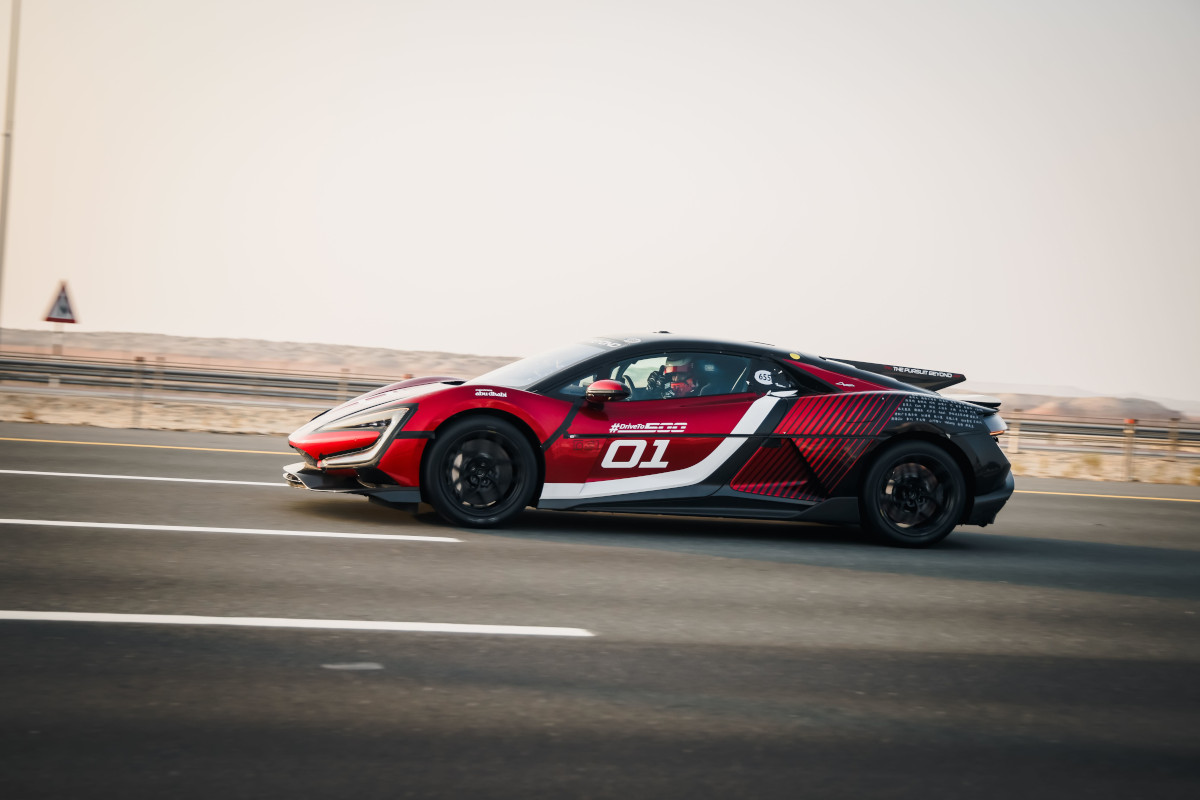
 YANGWANG U9 Xtreme sets a new production-car speed record at 496.22 km/h, showcasing BYD's ambitions in high-performance electric mobility. Credit: BYD
When the YANGWANG U9 Xtreme reached 496.22 km/h, it did more than set a new production-car speed benchmark. It sent a message about how far BYD has progressed — and how ambitious the company has become.
For years, BYD's international reputation was largely built around affordable electric vehicles, battery technology and manufacturing scale. Its success in the mass market made it one of the most influential players in the global automotive industry's transition to electrification. But competing on volume, technology and price is only one part of building a global automotive brand.
The U9 Xtreme serves a different purpose.
Developed under YANGWANG, BYD's ultra-luxury brand, the electric hypercar is a technological showcase. Its extraordinary speed, four-motor configuration and advanced electrical architecture demonstrate capabilities that extend well beyond the needs of ordinary production vehicles.
Yet the significance of the project goes beyond engineering.
In the automotive industry, performance has always played an important role in shaping brand perception. Ferrari, Porsche, Mercedes-AMG and McLaren have all used motorsport, high-performance engineering and exceptional vehicles to establish identities that influence how consumers perceive their entire product ranges.
BYD understands the value of that association.
The U9 Xtreme is unlikely to generate meaningful sales volumes compared with BYD's mainstream models. That is not the point. Its purpose is to create aspiration, attract international attention and demonstrate that Chinese manufacturers can compete at the highest levels of automotive engineering.
There is also a powerful marketing dimension. A speed record is an easily communicated achievement, capable of reaching audiences far beyond traditional automotive media. It provides a compelling narrative for international markets where BYD is still working to establish its identity beyond being a competitive electric-car manufacturer.
This matters because technological leadership and brand prestige are not necessarily the same thing. A company can produce excellent batteries, manufacture millions of vehicles and offer competitive technology without automatically earning the emotional recognition associated with established premium automotive brands.
Projects such as the U9 Xtreme help bridge that gap.
For BYD, the hypercar is therefore more than an engineering experiment or an expensive marketing exercise. It is an investment in brand positioning, using extreme performance to change the conversation around what the company represents.
The real achievement may not be the 496.22 km/h itself, but what BYD hopes people will think about the company after hearing about it.