The transition from internal-combustion engines to electric motors is often described as a change in propulsion technology. But that explanation misses a much larger transformation taking place beneath the surface. Electrification is challenging the architecture of the automobile itself — and, in doing so, could change how vehicles are developed, who manufactures them, and where value is created across the automotive industry.
For more than a century, the design of the modern automobile has been shaped by the physical requirements of the internal-combustion powertrain. The engine, transmission, fuel tank, exhaust system and associated components occupy considerable space. Their placement influences the proportions of a vehicle, the position of its cabin, its weight distribution and even the location of its luggage compartments.
Automotive engineers became exceptionally good at working within these constraints. Platforms evolved through generations of refinement, but the fundamental packaging logic remained largely tied to the requirements of combustion engines.
Electric propulsion changes that equation.
An electric motor is considerably more compact than a conventional engine and transmission. The battery pack, meanwhile, can be integrated into the vehicle floor, creating a relatively flat structural foundation. Depending on the configuration, electric motors can be positioned at the front, rear or both axles, while the absence of a conventional transmission tunnel and exhaust system creates new possibilities for interior packaging.
The result is not simply a different powertrain installed in an otherwise familiar vehicle. It is an opportunity to rethink the underlying architecture.
The skateboard concept
This is the principle behind the electric skateboard platform. Rather than designing a vehicle around an engine compartment and a conventional drivetrain, engineers can integrate the battery, electric drive units, suspension, steering, braking, thermal management and electronic systems into a relatively compact chassis.
The upper structure — the body, cabin and exterior design — can then be developed around that foundation.
In the industry, this upper section is often called the top hat. The separation between the lower platform and the upper body creates the possibility of developing different vehicle types around a common technical architecture.
In theory, a sufficiently adaptable platform could support a passenger car, a commercial van, a pickup or a specialized vehicle, depending on its dimensions, structural characteristics and intended application.
The advantages go beyond design flexibility. Integrating the battery into the floor can lower the center of gravity, while a more efficient use of space can create additional room for passengers or cargo without necessarily increasing the vehicle's exterior dimensions.
But the most significant implication may be industrial rather than purely technical.
When the platform becomes the product
Developing a competitive vehicle platform is one of the most expensive and demanding activities in the automotive business. It requires engineering expertise, substantial investment, extensive testing, safety validation, manufacturing capabilities and a supply chain capable of delivering components at the required quality and scale.
For a new company, building all of this from scratch can be a formidable barrier to entry.
The skateboard approach creates an alternative. Instead of every manufacturer independently developing the entire electric architecture, specialized companies can engineer and supply the underlying platform to other businesses.
The customer can then concentrate on developing the vehicle body, interior, design, brand identity and application, while relying on an existing technical foundation for essential systems.
This does not eliminate the complexity of vehicle development. A platform must still be adapted to the specific vehicle, and its integration requires structural engineering, crash testing, software development, thermal management, suspension tuning and regulatory approval. A chassis designed for a delivery van cannot simply be turned into a passenger car by placing a different body on top.
Nevertheless, the model could reduce duplicated engineering work, shorten development cycles and lower the initial investment required to bring certain types of electric vehicles to market.
It also creates a new opportunity for companies that may not want to become traditional automakers. They can instead specialize in developing the architecture and technology that other manufacturers use to build their products.
U Power: building the foundation for other manufacturers
One company pursuing this approach is U Power, whose UP Super Board is designed to serve as the underlying architecture for different electric vehicles.
The company's proposition is based on separating the development of the upper body from that of the lower platform. The UP Super Board integrates key vehicle systems, including electric propulsion, suspension, steering, braking and thermal management. U Power also emphasizes its electronic and computing architecture, including its communication and control systems, as part of a broader effort to create a configurable vehicle platform.
The objective is to give other manufacturers access to an integrated electric-vehicle foundation without requiring them to develop every major system independently.

U Power's UP Super Board: a modular electric platform designed to underpin multiple vehicle types. Photo: U Power.
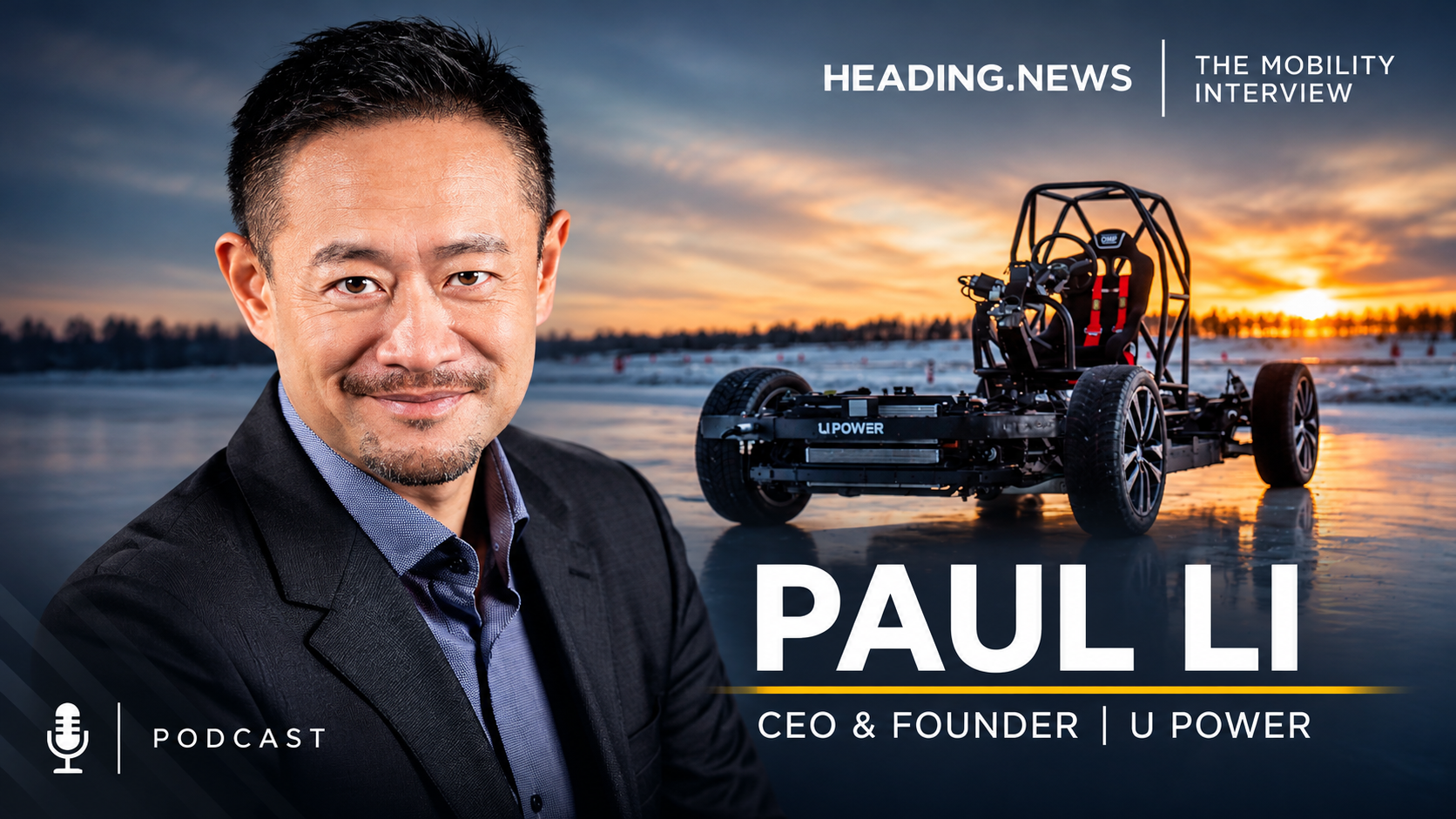
When introducing the UP Super Board at CES 2024, U Power founder and CEO Paul Li described the company's ambition to make this approach commercially accessible to other vehicle developers:
“We are pushing the boundary beyond the industry's current chassis capabilities. With the UP Super Board and our business model that integrates the most comprehensive and most competitive global EV supply chain, we are empowering clients to develop electric vehicles for local markets in a shorter time with lower investment,” Li said.
The statement captures the central proposition behind U Power's business model: rather than selling only a chassis, the company aims to provide an integrated technical foundation and supply-chain capabilities that allow partners to concentrate on developing vehicles for their own markets.
U Power says its platform can shorten vehicle development by six to twelve months and reduce research and development expenses by up to 30%. These are company-stated targets, rather than independently established results. They nevertheless illustrate the commercial proposition: make the most technically demanding part of an electric vehicle available as a foundation for other businesses.

U Power's UP Super Board in motion, demonstrating the platform in operation. Photo: U Power.
The UP VAN offers a practical demonstration of the concept. Developed on the UP Super Board, it is an electric light commercial vehicle aimed at urban logistics. Its design takes advantage of the platform's packaging flexibility to prioritize cargo capacity within a relatively compact exterior footprint.
The vehicle also provides an important step beyond the presentation of a bare chassis. In August 2024, U Power announced that the UP VAN had obtained European small-series Whole Vehicle Type Approval, providing a regulatory route to market in the European Union and other markets recognizing the certification.
That matters because a platform business cannot survive on engineering concepts alone. It must demonstrate that its technology can underpin complete vehicles that meet regulatory requirements and perform in real operating environments.
U Power has also explored partnerships that illustrate how the model could work commercially. At CES 2024, the company announced the delivery of an initial batch of UP Super Boards to US-based Olympian Motors and a development agreement with LUMOS EV for a commercial van based on U Power's technology. The idea was to allow partners to develop vehicles for their respective markets while relying on U Power's underlying engineering and supply-chain capabilities.
These announcements are relevant because they show the intended division of responsibilities: U Power provides the technical foundation and vehicle-development capabilities, while partners bring their own product concepts, market knowledge and commercial ambitions.
The challenge, of course, is converting partnerships and development agreements into sustained production volumes and repeat business. That is where the success of this model will ultimately be measured.
A multibillion-dollar opportunity beyond traditional automaking
The potential commercial scale of this emerging market is already attracting attention from research firms.
According to a Global Info Research study published in 2026, the global electric-vehicle skateboard-platform market was valued at approximately US$6.4 billion in 2025. The research projects that it could reach US$31.6 billion by 2032, representing a compound annual growth rate of approximately 25.9%.
Other research firms have produced similarly ambitious, although not identical, projections. A QYResearch study published in October 2025 estimated the market at approximately US$4.2 billion in 2024, forecasting growth to US$25.5 billion by 2031, with an annual growth rate of 26.5%.
These figures should be interpreted with some caution. Market-research firms use different definitions, segment boundaries and forecasting methodologies. Some include a wider range of integrated chassis technologies, while others focus more narrowly on skateboard architectures. They are estimates of market size, not independently audited industry revenues.
Nevertheless, their projections suggest that this is no longer simply an experimental engineering concept. It is developing into a substantial industrial market.
An especially interesting detail concerns the composition of demand.
According to QYResearch, commercial vehicles represented approximately 64.2% of the global skateboard-platform market in 2024, equivalent to around US$2.7 billion.
This is particularly relevant because commercial vehicles may offer some of the most compelling applications for modular electric architectures.
Urban delivery vans, pickups, logistics vehicles, specialized industrial vehicles and autonomous delivery platforms often have requirements that differ considerably from those of conventional passenger cars. Cargo capacity, operating efficiency, vehicle uptime and customization can be more important than traditional styling considerations.
A company operating a logistics fleet, for example, might see an opportunity to develop a purpose-built electric vehicle around its operational requirements without investing in the development of an entirely new powertrain and chassis architecture.
The opportunity is not limited to vehicle manufacturers either. Fleet operators, technology companies, logistics businesses and regional industrial groups could potentially become customers for platform-based vehicle development.
There is also an economic argument behind the transition.
A 2022 report by Element Energy, commissioned by the Platform for Electromobility, examined different scenarios for the adoption of electric vehicles in Europe. One of its scenarios assumed that widespread adoption of dedicated battery-electric manufacturing platforms could unlock cost savings of around 20% by 2030, helping accelerate purchase-price parity with combustion vehicles.
This was a modeled scenario rather than a measured saving or a guarantee that every manufacturer would achieve a 20% reduction. Still, it illustrates the potential economic significance of dedicated electric architectures.
For specialized platform suppliers, the commercial proposition becomes clear: if they can reduce duplicated engineering, simplify vehicle development and provide access to an established technical foundation, they may capture value from a growing number of businesses looking to enter vehicle manufacturing.
There is, however, an important distinction between the total skateboard-platform market and the opportunity available to independent suppliers.
Established automakers already develop and manufacture many of their own electric architectures. The projected market therefore includes activity that may never become available to companies such as U Power.
The addressable opportunity for independent suppliers depends on how many manufacturers choose to outsource platform development, how much of the vehicle architecture they purchase externally and whether these suppliers can compete on cost, quality and integration.
For U Power, this distinction is particularly important. The company's potential market is not every electric vehicle produced globally. It is the portion of vehicle development where customers are willing to rely on an external architecture rather than build their own.
Even that segment could represent a meaningful opportunity if the business model gains traction.
A different kind of automotive company
U Power's approach is part of a broader movement toward greater specialization in the electric-vehicle supply chain.
The company is not alone in exploring the opportunity. Battery manufacturer CATL, for example, has introduced its own integrated skateboard chassis, the Bedrock platform, positioning it as a foundation that could help other automakers reduce development time and costs. Other companies have also explored modular chassis and platform solutions for third-party vehicle development.
This is an important distinction: the skateboard concept itself is not entirely new, and platform sharing has long existed in the traditional automotive industry. Manufacturers have shared architectures across brands and vehicle segments for decades.
What electrification potentially changes is the degree to which the underlying vehicle architecture can become a distinct product, developed and supplied by a specialized company independently of the brand that sells the finished vehicle.
That could lead to a more distributed industrial structure. One company develops the chassis and electrical architecture. Another designs the vehicle. A technology partner provides software, computing or driver-assistance systems. A local manufacturer handles assembly, while a separate business operates the vehicles as part of a commercial fleet.
In this scenario, the traditional boundaries between automakers, suppliers and mobility companies become less rigid.
It could also create opportunities in markets where developing a complete vehicle independently would be financially unrealistic. A company with expertise in logistics, for example, might have a compelling reason to develop a purpose-built electric delivery vehicle, but little interest in investing years of engineering work in a battery platform, powertrain and electronic architecture. Access to an established platform could make that project more viable.
For countries seeking to develop local vehicle manufacturing capabilities, the model may be particularly relevant. Instead of importing a complete vehicle or investing in an entirely new automotive platform, local companies could potentially work with specialized suppliers to develop vehicles adapted to domestic requirements.
However, access to a platform does not automatically create a competitive automotive business. Manufacturing quality, component sourcing, after-sales support, homologation, software updates and production economics remain essential. A company still needs to build a complete vehicle that customers want to buy and that can be supported throughout its operating life.
The next battle may be fought beneath the bodywork
The electric-vehicle transition is creating new competitors, but it is also changing the nature of competition itself.
For established manufacturers, the challenge is to adapt decades of engineering and industrial expertise to a different technological foundation. For new entrants, the opportunity is to focus on specific parts of the value chain rather than replicate the entire structure of a traditional automaker.
The skateboard platform is one expression of that change. It turns the vehicle's underlying architecture into something that can potentially be developed, supplied and commercialized independently of the finished product.
U Power is an interesting example of a company trying to build a business around that possibility. Its UP Super Board and UP VAN illustrate how a shared technical foundation can be developed into a complete vehicle and offered as the starting point for other manufacturers.
Whether this approach becomes a significant part of the global automotive industry will depend on execution: the ability to industrialize platforms, secure long-term partners, achieve competitive costs and deliver vehicles at scale.
But the underlying question is already worth considering. If the most complex elements of an electric vehicle can be developed by specialized companies and integrated into a modular platform, does every company that wants to build a vehicle still need to become a traditional automaker?
The answer may increasingly be no. And that could prove to be one of the more consequential changes brought about by electrification — not simply how cars move, but who gets to build them.