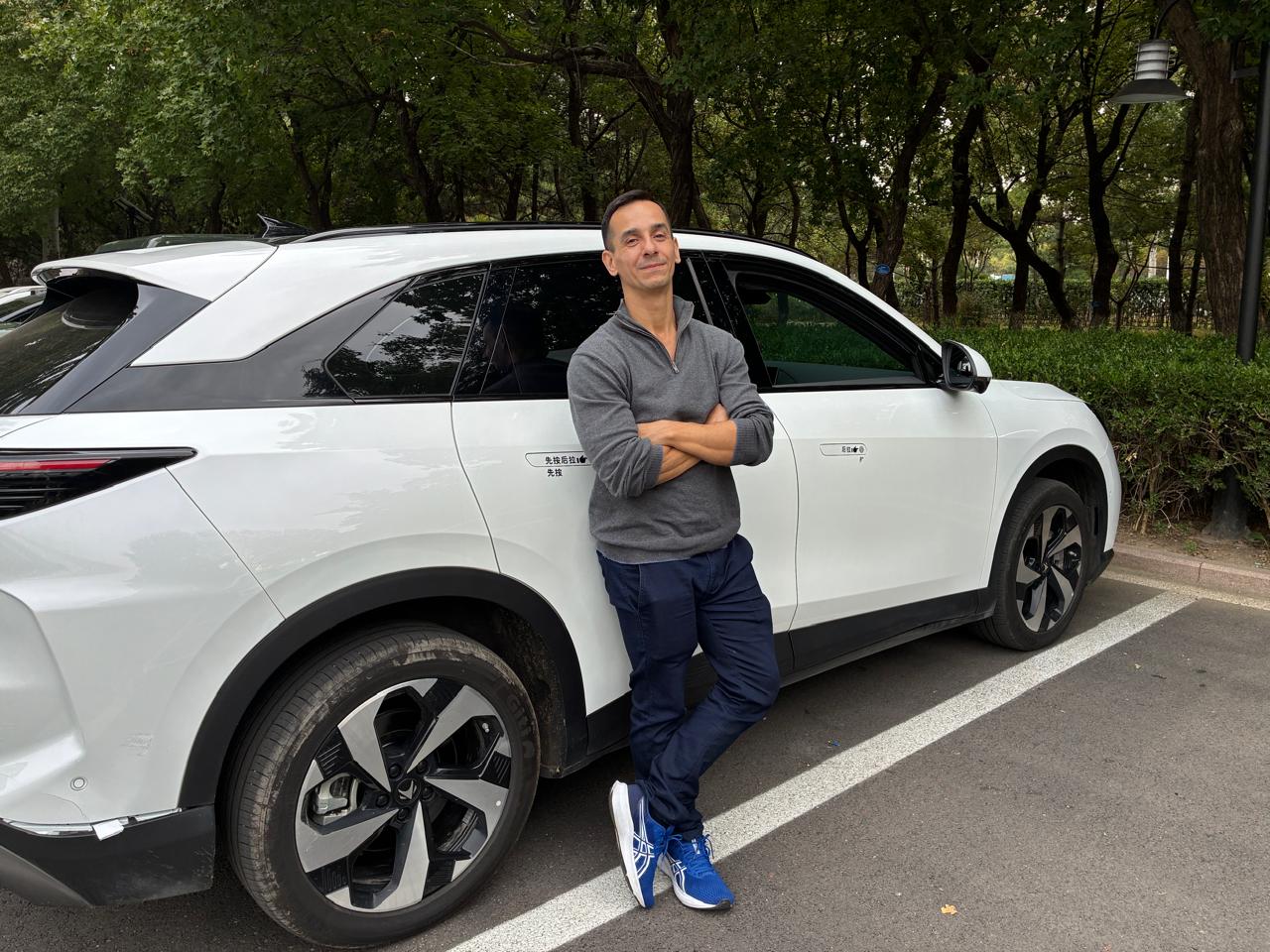
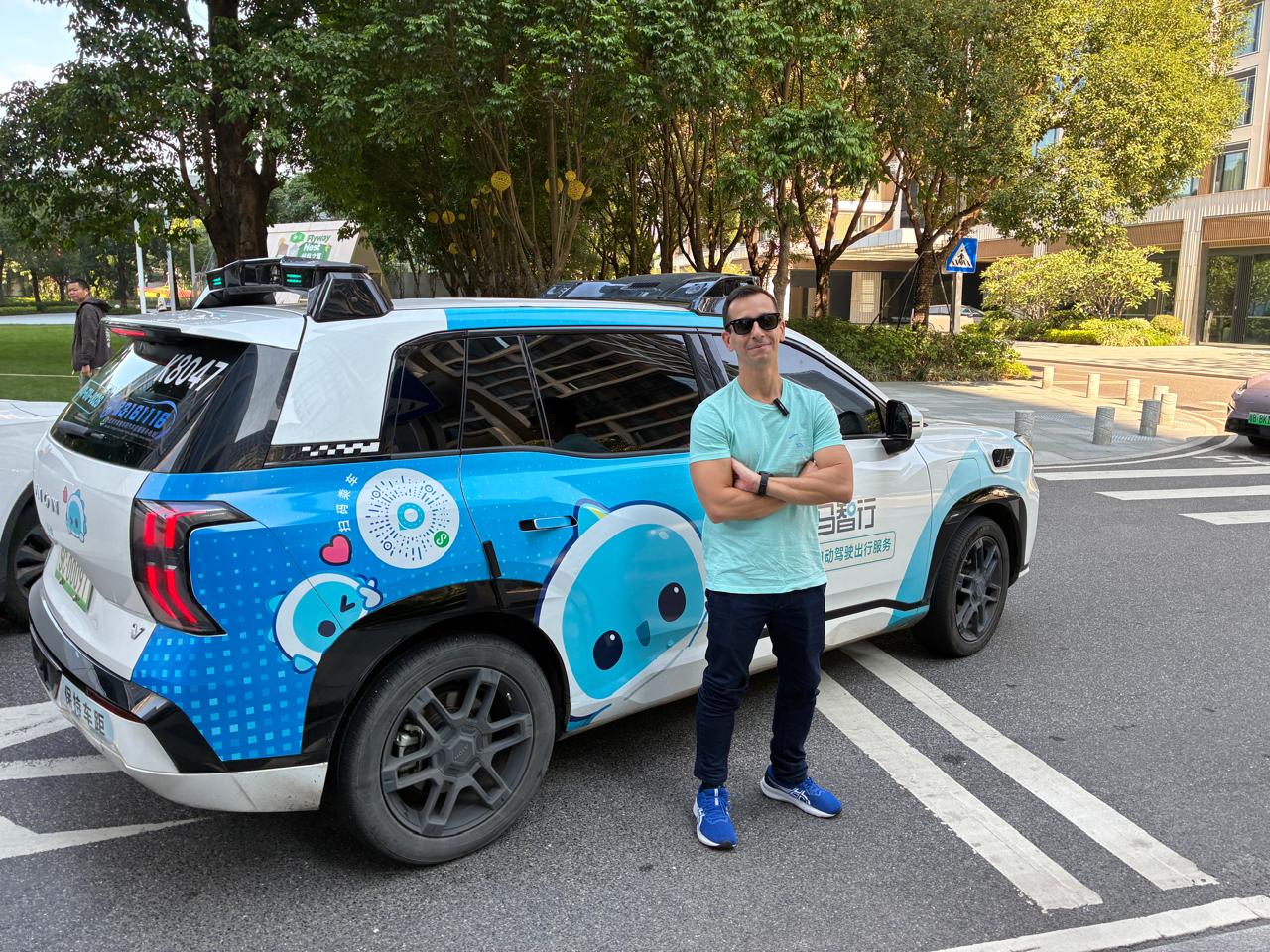
 At the frontier of urban mobility: a field evaluation of the Pony.ai robotaxi on the streets of Shenzhen, China. Credit: Heading.News
In the late 2010s, there was a widespread belief that autonomous driving would become ubiquitous before the end of the following decade.
That prediction proved to be a bit optimistic.
But not by much. While ubiquity hasn’t arrived just yet, the capabilities of the vehicles developed by companies at the forefront of this industry are already impressive. In the United States, Waymo navigates selected areas of certain cities with ease. On the other side of the world, China’s Pony.ai is one of the leading exponents of this progress.
I have previously covered the trajectory of autonomous driving, from the early initiatives of the DARPA challenge to the milestones achieved by companies like Pony.ai.
However, for the technology to truly become ubiquitous, there is a fundamental element: public adoption. And that depends on trust. After all, we are talking about a paradigm shift. For many people, sitting in the back seat of a vehicle with no one behind the wheel can still be an intimidating experience.
It was precisely to live through that experience that I boarded a Pony.ai robotaxi in Shenzhen, China. I traveled approximately 20 kilometers, divided across two distinct routes through the city’s streets.
Surprisingly, despite the initial shock, the absence of a driver was far less unsettling than I had imagined. And I believe this comes down to a combination of factors.
First, I have been following the development of this technology for some time and have a reasonable understanding of how the combination of LiDAR, radar, and cameras works, along with the systems that interpret the data captured by these sensors. But technical knowledge alone does not explain the feeling of trust.
The second factor was the experience itself. From the beginning, the trips went smoothly. Lane changes, braking, intersections, and interactions with other vehicles happened naturally. At no point did I feel the system was close to losing control of the situation.
And perhaps that is precisely one of the biggest signs of the technology's maturity: when it stops drawing attention to itself. The vehicle simply drives, without turning every maneuver into a demonstration of its capabilities.
The Gap Between Technology and Trust
My experience, naturally, is individual and does not allow for definitive conclusions about the safety of these systems or the perception of the general public. However, recent studies help illustrate the challenge that still lies ahead.
In the United States, the American Automobile Association (AAA), in its study on autonomous vehicle perception published in February 2025 titled Fear in Self-Driving Vehicles Persists, found that only 13% of American drivers would trust riding in an autonomous vehicle. Six out of ten still stated they were afraid of this type of technology. Trust levels had risen from the 9% recorded in the previous survey, but resistance remained significant.
The survey 5% of Americans Say They’ve Ridden in a Driverless Car, published by the Pew Research Center in July 2026, reinforces this scenario. Based on interviews conducted with 5,119 American adults in February of that year, the study found that 71% would feel little or not at all comfortable riding in a vehicle without a driver. Only 5% had ever tried this type of trip.
There is, however, one particularly interesting piece of data. J.D. Power's 2024 U.S. Robotaxi Experience Study, published in October 2024, identified a significant difference between those who had already used the service and those who had not. Among passengers who had already traveled in a robotaxi, 76% demonstrated trust in fully autonomous vehicles. Among respondents from the general population who had never had the experience, that figure was just 20%.
The study surveyed 3,773 people in August 2024. This difference does not prove that trying a robotaxi automatically transforms people's perceptions. The surveyed groups are different, and other factors could influence the results. Still, the correlation is revealing: direct contact with the technology appears to be linked to a much higher willingness to trust it.
Perception also varies across markets. In China, receptivity to autonomous driving appears to be considerably higher. According to PwC’s Voice of the Consumer Survey 2024, 87% of consumers in mainland China expressed some level of comfort with using fully autonomous vehicles for daily commutes, compared to a global average of 73%.
It is worth noting that this percentage includes both high and moderate comfort responses. In mainland China, 37% reported a high level of comfort, while 50% fell into the moderate range. Therefore, the result does not mean that 87% are fully convinced or ready to use a robotaxi immediately.
This more receptive environment coincides with the expansion of services such as Baidu's Apollo Go and the growing presence of companies like Pony.ai across Chinese cities. Even so, the willingness to try does not eliminate concerns regarding safety, reliability, and the absence of human control.
While the difference between markets is relevant, it does not alter the core issue: trust must be built through daily experience, not just technological promises.
Experience as Part of the Solution
It is important to remember that trust is not built solely on tech demonstrations or performance statistics. It depends on repetition, predictability, and, above all, a system’s ability to function seamlessly in everyday situations.
The public doesn't necessarily want to know how many sensors are on the vehicle, which algorithm interprets the data, or how many decisions are made per second. They want to reach their destination without scares, on schedule, and feeling safe.
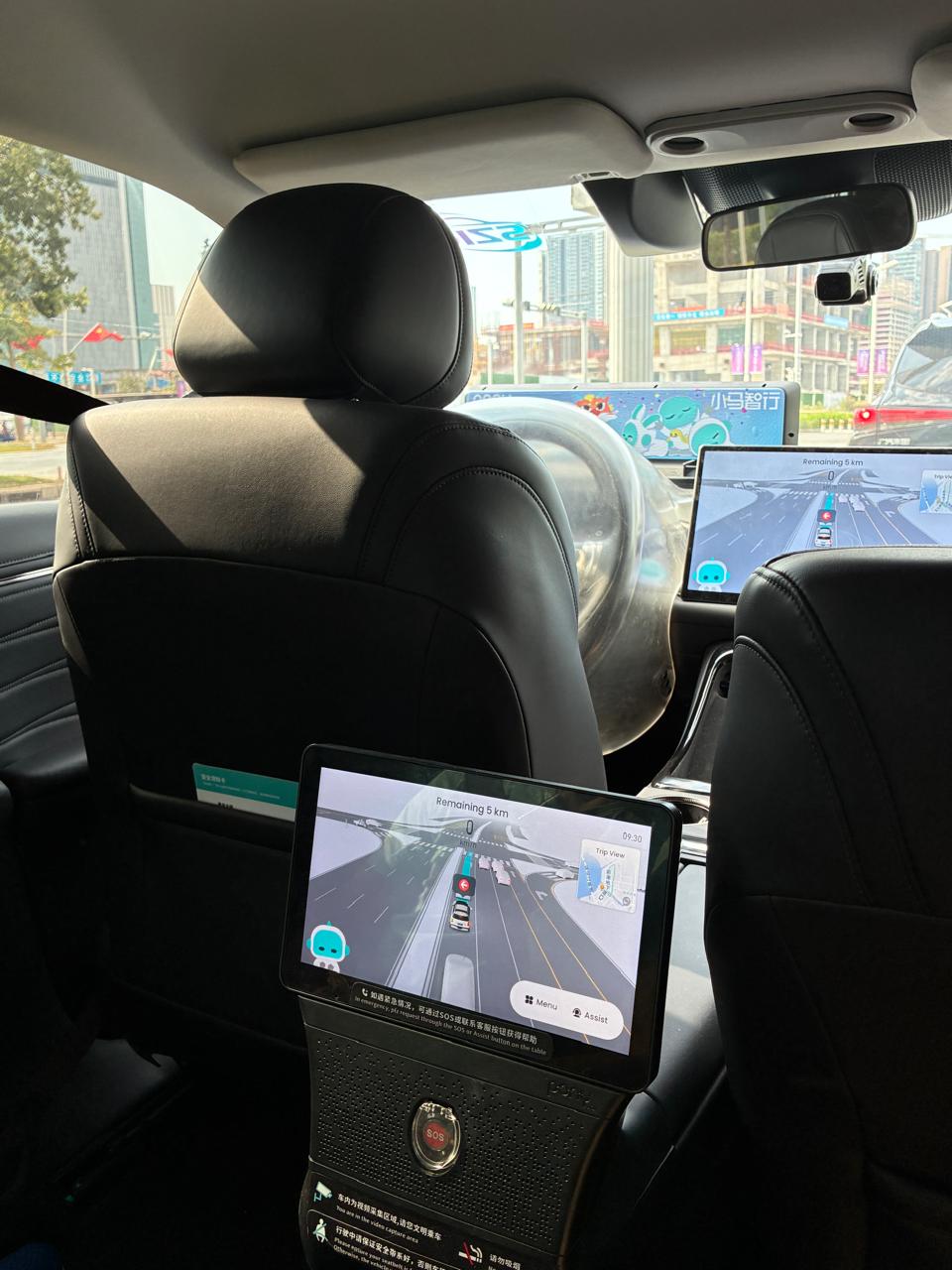 Zero drivers, dozens of sensors, and a 20 km journey through Shenzhen. Putting the Pony.ai robotaxi experience to the test in real-world conditions. Source: Heading.News
Ironically, during my time in China, I frequently used conventional ride-hailing services. And I can say that, at times, human drivers behind the wheel gave me more chills than the AI system operating the Pony.ai vehicle.
The comparison is obviously anecdotal, but it highlights an important point: familiarity with human drivers does not necessarily mean they are always the most predictable or safest option.
Autonomous driving still faces technical, regulatory, operational, and economic hurdles before achieving widespread adoption. But there is also a less tangible journey taking place inside the mind of every passenger.
The industry doesn't just need to teach machines how to drive. It needs to convince people that they can trust them.
And that might just be one of the most important journeys still ahead.