In the early 2000s, autonomous driving was still largely a research challenge. In the United States, the Defense Advanced Research Projects Agency (DARPA) organized a series of competitions designed to advance driverless vehicle development. The first Grand Challenge, held in 2004, ended without a vehicle completing the course. By 2005, five vehicles had completed the desert route, and in 2007, the Urban Challenge demonstrated that autonomous vehicles could navigate a simulated city environment alongside other traffic.
These experiments helped establish the foundations of the modern autonomous-driving industry. In 2009, Google began its self-driving car project, bringing the subject closer to commercial development. The United States had established an early lead in high-profile experiments, research talent, and private-sector development.
China's path developed on a different timeline. Its autonomous-driving ecosystem emerged through the convergence of domestic technology companies, automakers, research institutions, government initiatives, and a rapidly expanding automotive market. Rather than following a single breakthrough, the industry developed through successive stages: research, public-road testing, partnerships, pilot services, and commercial deployment.
2013–2016: China Begins Building Its Capabilities
Baidu began investing in autonomous driving in 2013, marking an early step in the development of China's domestic industry. The company brought experience in mapping, digital services, and computing into a field that would increasingly depend on cooperation between technology developers and vehicle manufacturers.
At this stage, the Western industry was already moving beyond experimental competitions. Google was conducting extensive road testing, and the development of dedicated autonomous-driving companies was beginning to take shape in the United States.
China was still building its own capabilities. The distinction was not that the country had no earlier research, but that a recognizable commercial ecosystem of technology suppliers, vehicle manufacturers, and autonomous-mobility companies was only beginning to emerge.
The following years would bring a broader group of participants into the field. Baidu would become one of the most prominent domestic players, while new companies focused on developing systems for passenger transport, commercial fleets, and other applications.
2017–2018: An Industry Takes Shape
A major milestone came in April 2017, when Baidu announced Apollo, an open autonomous-driving platform intended to make its technology and development resources available to industry partners. Instead of developing every component in isolation, participating companies could build on shared tools and collaborate with vehicle manufacturers and suppliers.
The initiative represented a significant step in China's effort to establish a broader industrial ecosystem around autonomous driving.
Other companies were pursuing different approaches. Pony.ai, founded in late 2016, established a research hub in Guangzhou in 2017. In February 2018, it formed a strategic partnership with GAC Group and launched an autonomous-vehicle fleet on public roads in Guangzhou. Later that year, it introduced PonyPilot, its autonomous ride-hailing service.
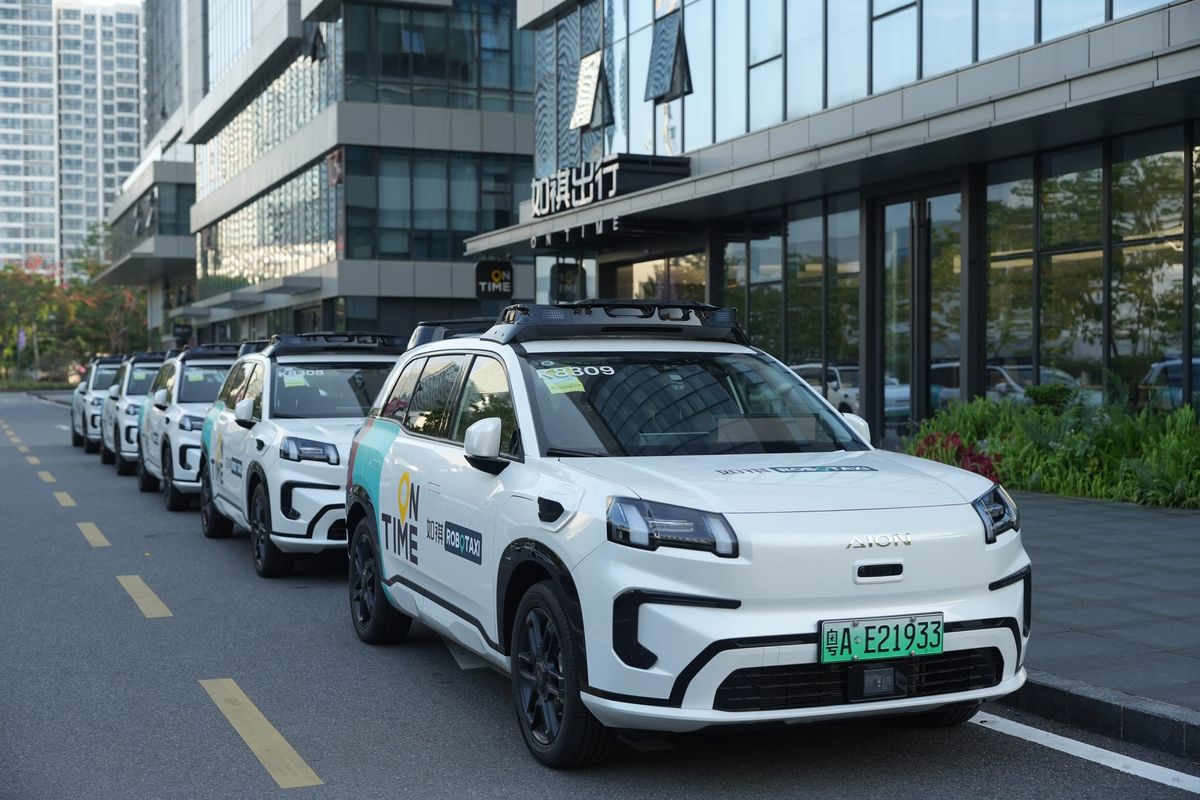 Pony.ai's robotaxi operating in Guangzhou, where partnerships with automakers and public-road testing helped turn autonomous driving into a mobility service.
These developments illustrated the growing importance of partnerships between technology companies and established automakers. The objective was no longer limited to demonstrating that a vehicle could navigate a controlled environment. Companies were beginning to test how autonomous vehicles might operate as part of everyday transportation services.
Meanwhile, American companies continued advancing their own programs. By this stage, the two markets were pursuing similar technological and commercial goals, but China was developing a particularly broad network around autonomous driving. In the United States, the field had grown out of research programs and technology companies such as Google, which were pushing autonomous vehicles toward real-world deployment. In China, companies such as Baidu were increasingly working with automakers, research institutions, and local governments to develop the technology through public-road testing, pilot services, and partnerships. The result was an emerging ecosystem that connected autonomous driving more directly with China's automotive and mobility industries.
2019–2020: From Testing to Public Services
By 2019, China's autonomous-driving industry was moving toward public-facing pilot services. Baidu's Apollo Go program opened to initial users in Changsha in September, providing a concrete example of how autonomous vehicles could begin operating within a defined urban service area.
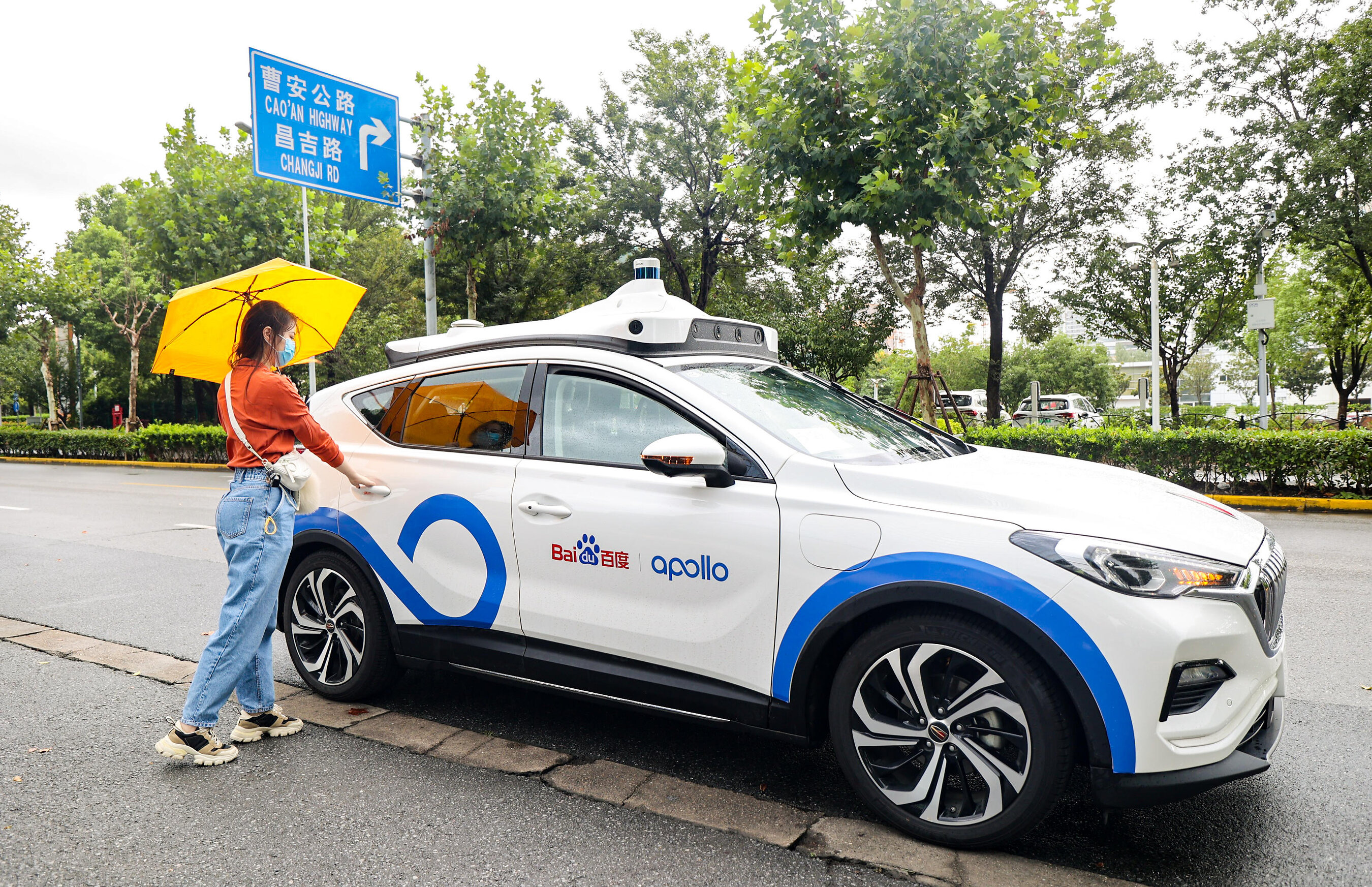 Baidu's Apollo Go robotaxi on a Beijing street, reflecting the shift from autonomous-driving experiments toward public-road services in China.
The significance of these programs lay in the transition from individual test vehicles to organized fleets. A service required more than a vehicle capable of completing a journey. It required operational procedures, designated service areas, passenger access, coordination with local authorities, and the ability to manage vehicles repeatedly under real-world conditions.
Pony.ai also expanded its activities during this period. In 2019, it began public-facing robotaxi operations in Irvine, California, while continuing to develop its presence in China. This was an important reminder that the emerging industry was not divided into completely separate national efforts: companies could develop technology in one market, test in another, and establish partnerships across borders.
Investment also became a significant part of the story. In February 2020, Pony.ai announced a Series C financing round totaling US$462 million, including a US$400 million strategic investment from Toyota. The investment illustrated the growing involvement of established automotive manufacturers in autonomous-driving development and the importance of connecting new technology companies with the resources and industrial experience of the automotive sector.
China's large domestic vehicle market, extensive urban transportation networks, and expanding electric-vehicle industry offered a substantial environment in which companies could develop and test their services. However, operating in a large market did not automatically make deployment simple. Dense traffic, complex road conditions, passenger safety, and local operating requirements remained important challenges.
2021–2022: Toward Driverless Commercial Operations
The next stage involved moving from supervised testing and pilot programs toward services operating without a safety driver inside the vehicle, subject to local permissions and defined operating conditions.
In 2021, Pony.ai received approval for paid autonomous robotaxi services in Beijing. Baidu's Apollo Go also continued expanding its operations. By the end of 2020, Baidu reported that its robotaxi and robobus fleets had provided more than 210,000 rides, demonstrating that these programs were beginning to generate operational experience beyond isolated demonstrations.
In 2022, Pony.ai reported receiving permission to provide fare-charging driverless robotaxi services in Beijing. The company also expanded its activities into Shenzhen and other major Chinese cities. These developments represented a shift in the industry's priorities: companies were increasingly concerned with service availability, operating costs, fleet management, vehicle production, and the requirements for expanding beyond limited pilot areas.
The distinction between different forms of deployment remained important. Public-road testing, passenger services with a safety operator, driverless testing, and paid commercial operations were not interchangeable milestones. Each represented a different stage in the development and authorization of autonomous mobility.
The same distinction applies internationally. American and Chinese companies were pursuing similar long-term objectives, but the pace and scope of deployment varied by company, city, regulation, and operating conditions. There was no single date on which autonomous driving became commercially established in either country.
The Vehicle Becomes Part of a Larger Mobility System
China's progress in autonomous driving also coincided with the rapid development of its electric-vehicle industry. This created opportunities for closer cooperation between vehicle manufacturers, technology companies, mobility operators, and component suppliers.
Electric vehicles offered a platform that could be adapted for new transportation services, while established automakers brought manufacturing capacity, supply-chain relationships, and vehicle-development experience. Technology companies contributed expertise in mapping, navigation, computing systems, and fleet operations.
This convergence helped change the way autonomous driving was approached. The vehicle was no longer the only focus. Companies also had to consider the service built around it: where vehicles could operate, how passengers would access them, how fleets would be maintained, and how operations could expand into additional areas.
Baidu, Pony.ai, WeRide, AutoX, DeepRoute.ai, and Momenta became part of a broader ecosystem pursuing different combinations of vehicle technology, partnerships, and commercial applications. Their strategies were not identical, and their progress varied, but together they illustrated the breadth of China's emerging autonomous-mobility industry.
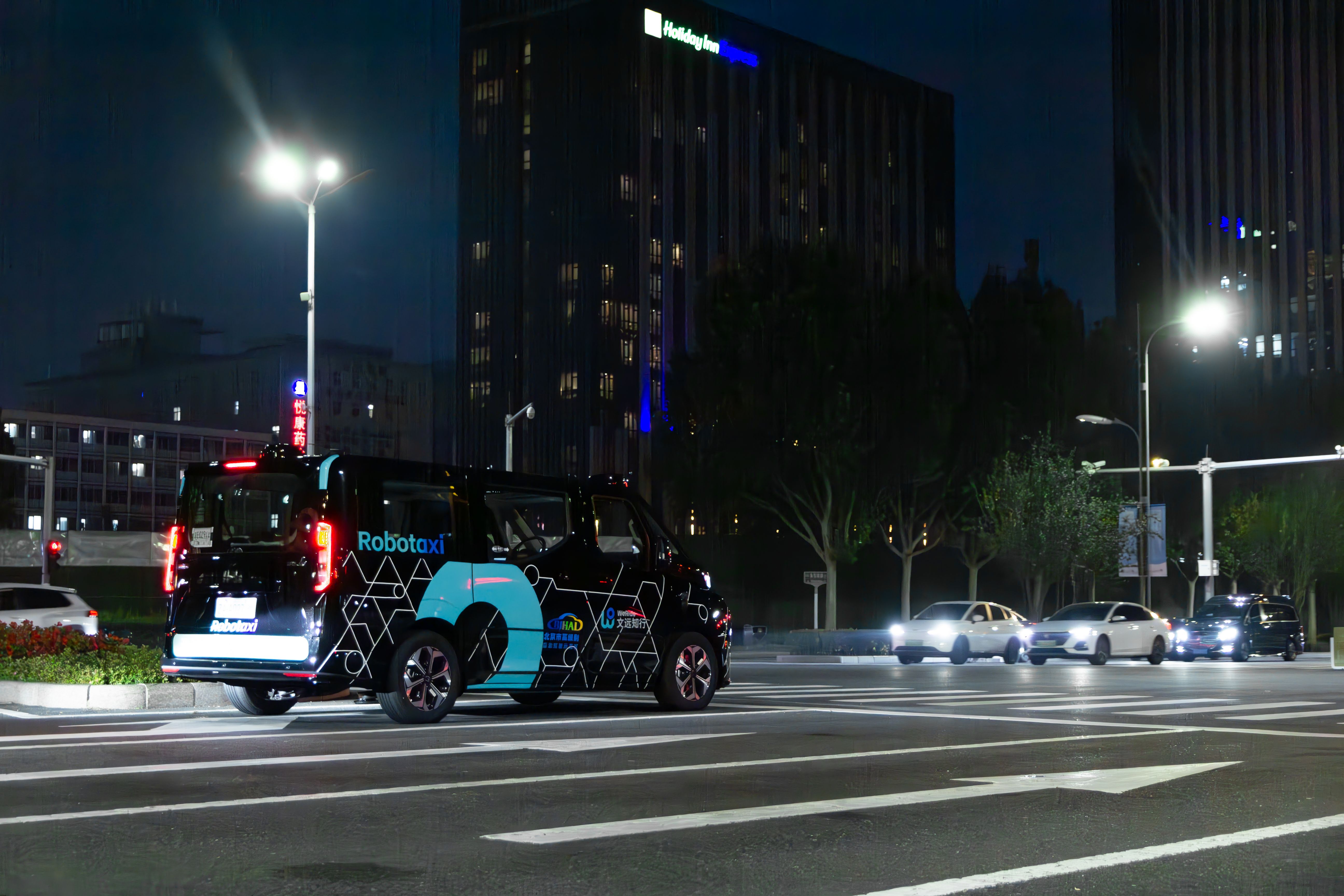 WeRide's autonomous vehicle as part of China's expanding ecosystem of robotaxis, public-road testing, and emerging mobility services.
A Different Route Into the Race
China did not enter the autonomous-driving race at the same moment or through precisely the same route as the United States. The American research community had established important milestones through the DARPA challenges and early private-sector programs. China subsequently developed its own ecosystem around technology companies, automakers, public-road testing, urban pilot services, and commercial partnerships.
By the early 2020s, the comparison was no longer simply between Western research projects and Chinese efforts to catch up. Both markets had moved toward public-facing services, while companies in each continued to face questions about safety, cost, regulation, reliability, and the practical limits of operating without a human driver.
China's development was shaped by its particular industrial and urban environment: a large domestic automotive market, extensive mobility networks, strong vehicle manufacturing capacity, and a growing electric-vehicle sector. These conditions helped create opportunities for testing and deployment, although they did not eliminate the technical, operational, or regulatory challenges involved.
The country's entry into autonomous driving was therefore not a single event, nor was it simply the arrival of a new technology. It was the gradual formation of an industry. Over roughly a decade, China moved from early development efforts to a network of companies, manufacturing partners, city-level trials, and emerging commercial services. That transition established the basis for the next phase of competition: expanding operations, reducing costs, and determining where driverless mobility could become a practical part of everyday transportation.